
LiFePO4 Battery Self-Consumption Optimization: Maximize Solar Usage
Are you getting the most out of your home energy storage system? Many homeowners with LiFePO4 batteries leave significant value on the table by not optimizing their self-consumption rate—the percentage of solar energy they generate and actually use themselves rather than exporting to the grid.
In 2026, with rising electricity prices and evolving grid policies across Europe, Australia, and North America, maximizing self-consumption has become the key to achieving the fastest return on investment for your solar battery system. This guide will show you proven strategies to optimize your LiFePO4 battery usage and reduce your reliance on the grid.
What Is Self-Consumption and Why Does It Matter?
Self-consumption refers to the portion of solar energy your home directly uses from your panels or battery, rather than exporting it to the electrical grid. A higher self-consumption rate means:
- Lower electricity bills – You buy less power from the grid
- Faster battery ROI – You maximize the value of your LiFePO4 investment
- Greater energy independence – Reduced vulnerability to price spikes
- Environmental benefits – More efficient use of clean energy
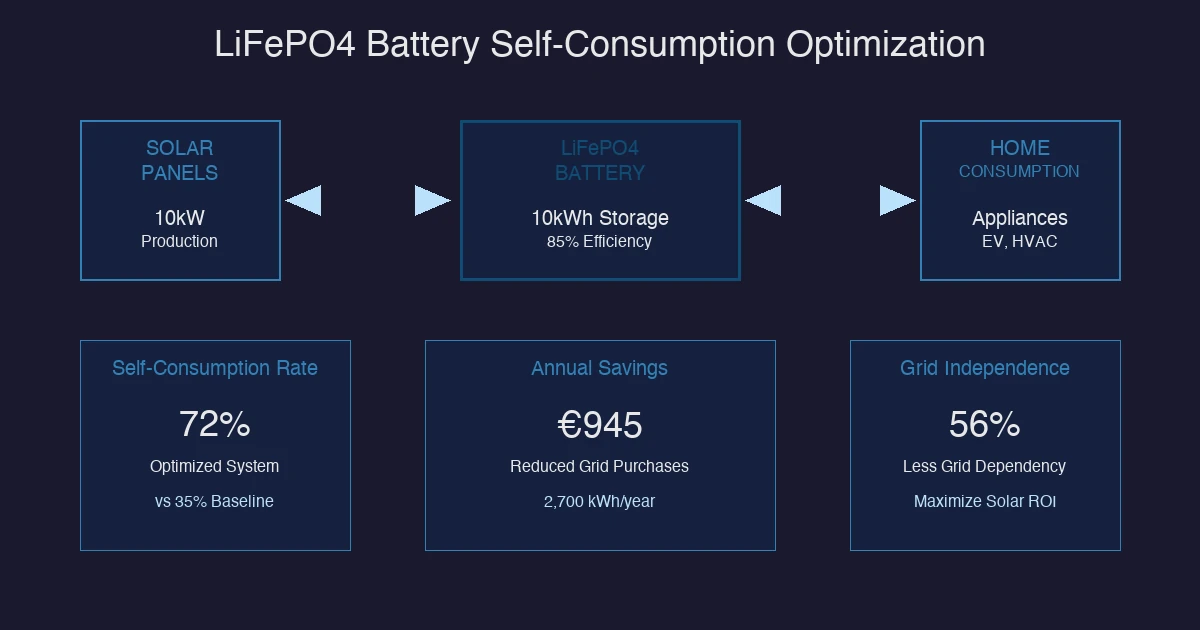
In countries like Germany, the UK, and Australia, feed-in tariffs have dropped significantly while electricity prices continue to rise. This makes self-consumption far more valuable than exporting excess solar. For every kWh you consume from your battery instead of buying from the grid, you could save €0.30-0.40 in Europe or $0.25-0.35 in Australia.
The Self-Consumption Challenge: Common Barriers
Despite having a LiFePO4 battery system, many homeowners achieve only 30-50% self-consumption rates. Here’s why:
Mismatched Timing
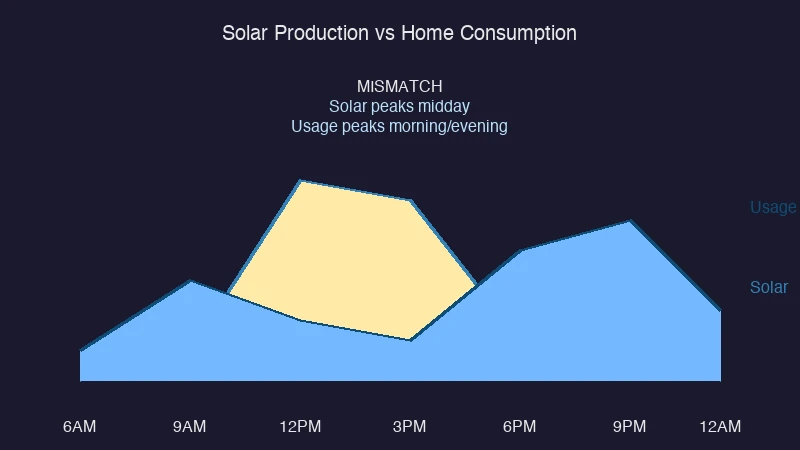
Solar production peaks at midday (10 AM – 2 PM), but most households consume the most energy in the morning and evening. Without strategic battery management, excess solar gets exported rather than stored.
Insufficient Battery Capacity
Undersized battery systems fill up quickly on sunny days, forcing excess solar into the grid. Conversely, oversized batteries may never fully charge during winter months.
Lack of Monitoring and Automation
Many systems operate on basic charge/discharge schedules without adapting to weather forecasts, consumption patterns, or dynamic electricity pricing.
5 Strategies to Optimize LiFePO4 Battery Self-Consumption
1. Implement Smart Load Shifting
Load shifting means moving high-consumption activities to times when your solar panels are producing power. This is one of the simplest and most effective ways to boost self-consumption without additional equipment.
Practical tactics:
- Run dishwashers, washing machines, and dryers between 10 AM – 3 PM
- Program pool pumps to operate during peak solar hours
- Charge EVs during daylight hours when possible
- Pre-cool or pre-heat your home before sunset using solar power
Studies show that strategic load shifting alone can increase self-consumption by 15-25%.
2. Optimize Battery Charge/Discharge Schedules
Your LiFePO4 battery’s charging behavior dramatically affects self-consumption. The goal is to reserve battery capacity for evening peak hours while capturing as much midday solar as possible.
Recommended settings:
| Time Period | Battery Mode | Reason |
|---|---|---|
| 6 AM – 10 AM | Passive (grid if needed) | Preserve remaining overnight charge |
| 10 AM – 3 PM | Charge from solar | Capture peak solar production |
| 3 PM – 6 PM | Hold/Minimize discharge | Save battery for evening peak |
| 6 PM – 10 PM | Discharge to home | Maximize self-consumption during peak rates |
| 10 PM – 6 AM | Discharge as needed | Supply overnight baseload |
For detailed guidance on proper LiFePO4 charging parameters, see our LiFePO4 Battery Charging Guide.
3. Use Weather-Aware Charging
Modern LiFePO4 battery systems with smart inverters can access weather forecasts to optimize charging. On cloudy days, the system can:
- Preserve more battery capacity overnight
- Minimize daytime discharge to ensure adequate reserves
- Charge from the grid during off-peak hours if solar will be insufficient
This predictive approach can improve self-consumption by 10-15% compared to static schedules.
4. Integrate with Dynamic Electricity Pricing
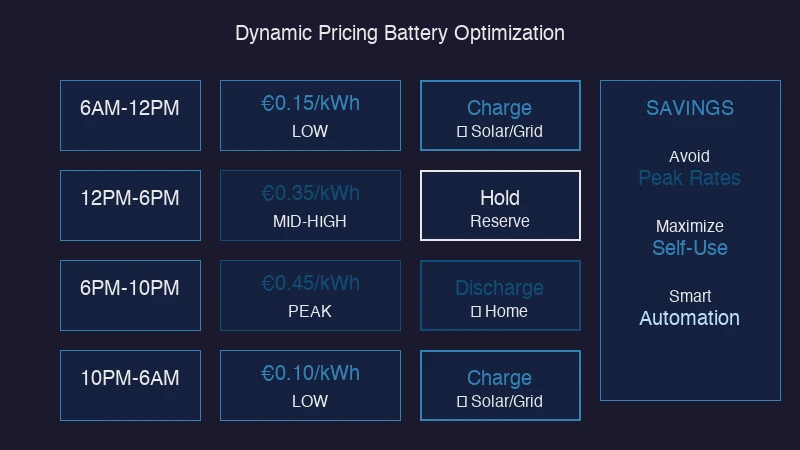
In markets with time-of-use (TOU) tariffs or real-time pricing, your battery system can automatically optimize when to charge and discharge based on electricity costs.
How it works:
- Battery charges during low-price periods (or from solar)
- Battery discharges during high-price periods to avoid expensive grid purchases
- System exports to grid only when feed-in rates are favorable
This strategy is particularly valuable in the UK, Germany, and parts of Australia where TOU pricing is common. For more on grid connection requirements, see our guide on UK G99/G98 Grid Connection certification.
5. Install Energy Monitoring and Automation
Real-time monitoring is essential for understanding your energy flows and identifying optimization opportunities. A good monitoring system tracks:
- Solar production (real-time and historical)
- Battery state of charge and health
- Home consumption by circuit or major appliance
- Grid imports and exports
- Self-consumption percentage
Advanced systems like Home Assistant integration with BMS protocols (RS485, CAN bus) enable automated responses to changing conditions.
Self-Consumption Optimization: Before and After
Let’s look at a real-world example of a typical European household with a 10 kW solar system and 10 kWh LiFePO4 battery:
| Metric | Before Optimization | After Optimization | Improvement |
|---|---|---|---|
| Self-Consumption Rate | 35% | 72% | +37% |
| Annual Grid Purchases | 4,800 kWh | 2,100 kWh | -56% |
| Annual Electricity Bill | €1,680 | €735 | €945 savings/year |
| Battery Utilization | 45% average daily discharge | 85% average daily discharge | +40% |
Key changes implemented:
- Shifted dishwasher and washing machine to daytime operation
- Programmed battery to reserve capacity for evening peak (6-10 PM)
- Installed smart monitoring with weather forecast integration
- Set dynamic charging based on TOU electricity rates
For more details on battery sizing considerations, see our guide on how much battery capacity you really need.
Tools and Technologies for Optimization
Smart Energy Management Systems
Several platforms can help automate your self-consumption optimization:
- Home Assistant – Open-source platform with extensive integration options for LiFePO4 BMS and inverters
- SolarEdge Energy Manager – Comprehensive monitoring and optimization for SolarEdge systems
- Tesla Powerwall Gateway – Built-in smart features for LiFePO4 battery systems
- Fronius Solar.web – Advanced monitoring with consumption analysis
Smart Plugs and Appliance Controllers
For load shifting automation, consider:
- WiFi smart plugs with scheduling capabilities
- Smart circuit breakers that respond to solar production
- EV chargers with solar diversion features
Regional Considerations for 2026
Optimization strategies should be adapted to your local market conditions:
Europe
- Germany: Focus on self-consumption due to low feed-in tariffs; leverage KfW subsidies for battery storage
- UK: Optimize for peak rate avoidance with TOU tariffs; comply with G99/G98 requirements
- Netherlands/Belgium: Take advantage of VAT exemptions and net-metering where available
Australia
With high solar penetration and export limitations in many areas, self-consumption is critical. Systems should comply with Australian CEC standards and focus on maximizing daytime usage.
Common Mistakes to Avoid
- Over-discharging the battery – Deep discharges below 10% SoC can reduce LiFePO4 lifespan. Set minimum discharge limits to 10-20%.
- Ignoring seasonal variations – Summer and winter require different strategies. Adjust your settings quarterly.
- Not monitoring results – Track your self-consumption rate monthly and adjust strategies accordingly.
- Exporting during low feed-in periods – If feed-in rates are low, prioritize battery charging over grid export.
For battery health monitoring, check our guide on SoH estimation for LiFePO4 batteries.
Conclusion: Maximize Your LiFePO4 Investment
Optimizing self-consumption is not just about technology—it’s about changing how you think about energy use. By implementing smart load shifting, configuring optimal battery schedules, and leveraging monitoring tools, you can achieve self-consumption rates of 70% or higher.
With electricity prices continuing to rise across Europe, Australia, and other markets, the financial benefits of optimization have never been greater. A well-optimized LiFePO4 battery system can reduce your electricity bill by 50-70% while extending battery life through proper cycling management.
The strategies outlined in this guide—load shifting, smart scheduling, weather-aware charging, dynamic pricing integration, and real-time monitoring—work together as a comprehensive approach to maximizing your solar energy investment.
Get Expert Help with Your Battery Optimization
At Insum Energy, we specialize in high-quality LiFePO4 battery systems designed for maximum self-consumption and long-term reliability. Our team can help you:
- Size your battery system correctly for your consumption patterns
- Configure optimal charge/discharge settings
- Integrate smart monitoring and automation
- Navigate regional regulations and incentives
Contact Insum Energy today for a personalized assessment and discover how much you could save with an optimized LiFePO4 battery system.



2 Comments