
German KfW Solar Battery Subsidy 2026: Complete Application Guide
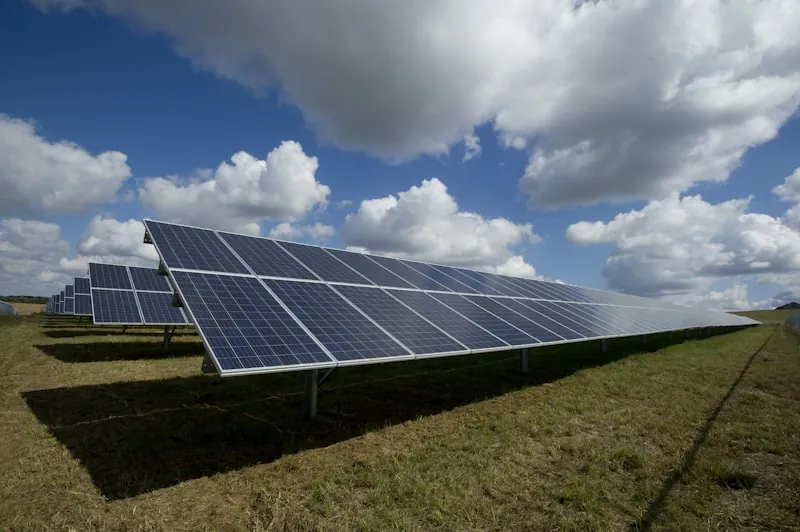
Germany is leading Europe’s residential energy storage revolution — and the German government’s KfW (Kreditanstalt für Wiederaufbau) bank is putting serious money behind it. Through its targeted subsidy programmes, homeowners who install solar panels combined with battery storage can receive up to €10,500 in direct grants and low-interest loans in 2026.
If you’re a German homeowner planning a solar installation, this is one of the best financial windows you’ll get. But the KfW programme has strict rules — about pre-approval, installer certification, and technical specifications — that catch out many first-time applicants.
This complete guide walks you through everything: which programmes apply, who qualifies, how to apply step-by-step, and the technical requirements your battery system must meet.
What Is the KfW Solar Battery Subsidy Programme?
KfW is Germany’s state-owned development bank. It doesn’t lend money directly to consumers — instead it refinances approved installers and programme partners, who then pass the subsidy on to homeowners as grants, reduced prices, or low-rate financing.
For residential solar-plus-storage in 2026, two KfW programmes are most relevant:
| Programme | Focus | Subsidy Type | Max Amount |
|---|---|---|---|
| KfW 270 | Solar electricity generation | Low-interest loan | Up to 100% of eligible costs |
| KfW 275 | Solar + battery storage combo | Grant + loan combo | Up to €10,500 grant + favourable loan |
| KfW 261 | Energy-efficient renovation | Grant | Varies by measure |
The KfW 275 programme is the most attractive for battery storage. It was significantly expanded under Germany’s updated Energiewende roadmap, with increased grant rates for systems installed from January 2026 onwards.
Who Is Eligible for the KfW Battery Subsidy?
Eligibility criteria are specific. Before you get excited about the numbers, check that you meet all of the following:
- Property type: Owner-occupied residential buildings in Germany (single-family homes and apartments)
- New installation only: The solar and/or battery system must be newly installed — retrofits of existing systems generally don’t qualify
- Approved installer: The installation company must be a registered KfW programme partner
- Ownership model: You must own the system (not lease it through a PPA or power purchase agreement model — though some PPA configurations with ownership transfer do qualify)
- Grid connection: The system must be connected to the German public grid
- Planning certificate: In some federal states, a solar planning certificate (Solaranlagenplanung) from a certified energy adviser is required before application
Note on landlords and property developers: KfW 275 is primarily designed for owner-occupiers. Landlords can access KfW 270 loans but grant rates are different. Check with a KfW-certified installer for your specific situation.
How Much Can You Receive?
The KfW 275 subsidy is structured as a grant that increases with system size. As of 2026, the following rates apply:
| System Component | Subsidy Rate | Example (10 kWp + 10 kWh) |
|---|---|---|
| Solar panels (per kWp) | Up to €300 per kWp | €3,000 for 10 kWp |
| Battery storage (per kWh usable) | Up to €150 per kWh | €1,500 for 10 kWh |
| Smart meter bonus | Flat €500 | €500 |
| Full system grant total | Up to €10,500 | ~€5,000 combined |
| KfW loan (separate) | Up to €150,000 at 0.01–2% | Financing the remainder |
Actual amounts depend on your installer’s KfW programme status and the federal state you live in, as some states layer additional regional subsidies on top of KfW.
Step-by-Step: How to Apply
The most critical thing to understand: you must apply before installation begins. Retroactive applications are not accepted. Here’s the exact process:
Step 1 — Find a KfW-Approved Installer
Start by finding an installer registered with the relevant KfW programme. You can search the KfW installer database directly, or ask Insum Energy — we work with certified German installation partners who handle the KfW process from start to finish.
Step 2 — Get a Formal Quote
Your chosen installer will conduct a site assessment and provide a detailed quotation that includes:
- System size (kWp for solar, kWh for battery)
- Equipment specifications (panel brand, inverter, battery cells, BMS)
- Estimated annual generation
- Total cost breakdown
- KfW subsidy amount they will pass on to you
Step 3 — Submit the KfW Application
Your installer submits the application on your behalf through the KfW subsidy portal (KfW-Zuschussportal). You’ll need:
- Building registration (Grundbuchauszug) or proof of ownership
- Installer quote and system design
- Federal state-specific forms (varies)
- Your tax ID (Steuer-Identifikationsnummer)
Processing typically takes 2–4 weeks. You’ll receive a KfW grant notice (KfW-Zuschussbescheid) confirming the approved amount.
Step 4 — Install the System
Only after receiving the grant notice can installation commence. The system must be installed exactly as specified in the approved application — any changes require a new application.
Step 5 — Commissioning and Proof of Completion
Once installed, your installer submits commissioning documentation to KfW, including:
- Registration with the local grid operator (Netzbetreiber)
- Photos of the installed system
- Signed installation certificate
- Smart meter installation confirmation
After verification, KfW releases the grant — typically within 4–6 weeks of commissioning.
Technical Requirements Your Battery System Must Meet
KfW doesn’t just hand out money for any battery. The system must meet specific technical standards:
Battery Capacity
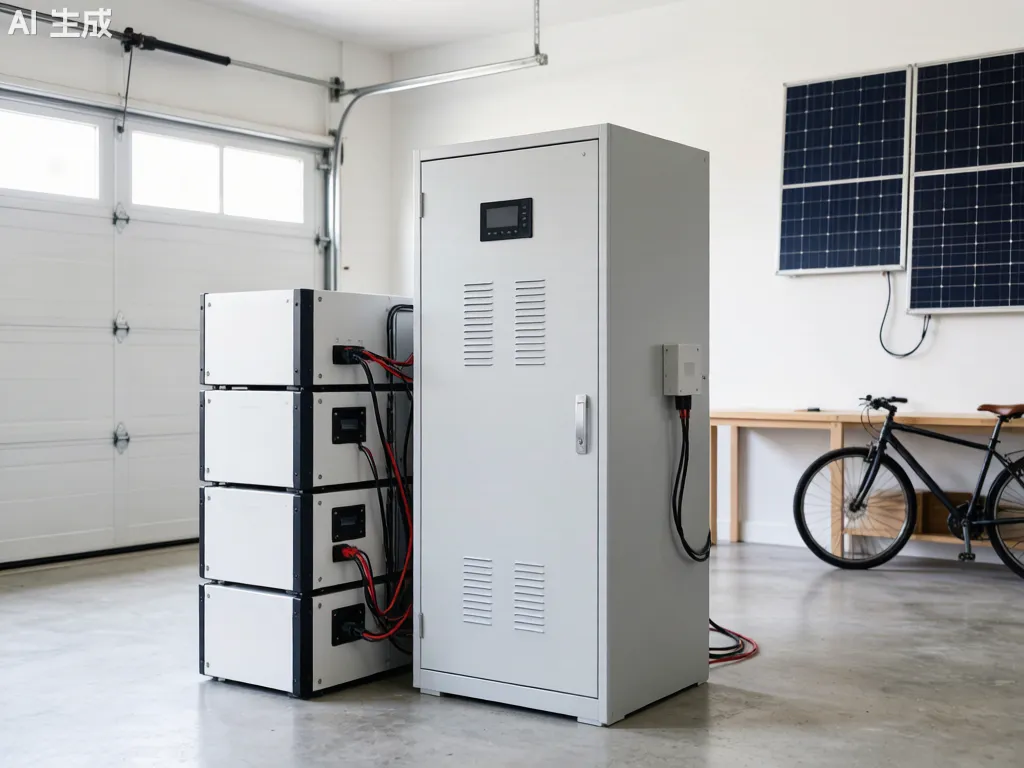
- Minimum usable capacity: 1 kWh
- Maximum eligible capacity for subsidy: 30 kWh for residential systems
- Depth of discharge (DoD): Must be at least 80% usable
- Cycling performance: Should meet IEC 62619 or equivalent safety standard
Inverter and System Efficiency
- System efficiency (round-trip): ≥ 85%
- Inverter must be certified to VDE-AR-N 4105 (German grid connection standard)
- Hybrid inverters (solar + battery in one unit) are eligible
Smart Meter Requirement
From 2026, a digital smart meter (intelligenter Stromzähler) is mandatory for KfW battery subsidy eligibility in most federal states. This enables:
- Dynamic load management
- Grid feedback reporting (for feed-in tariff calculations)
- Remote monitoring (required for KfW compliance audits)
Cell Chemistry
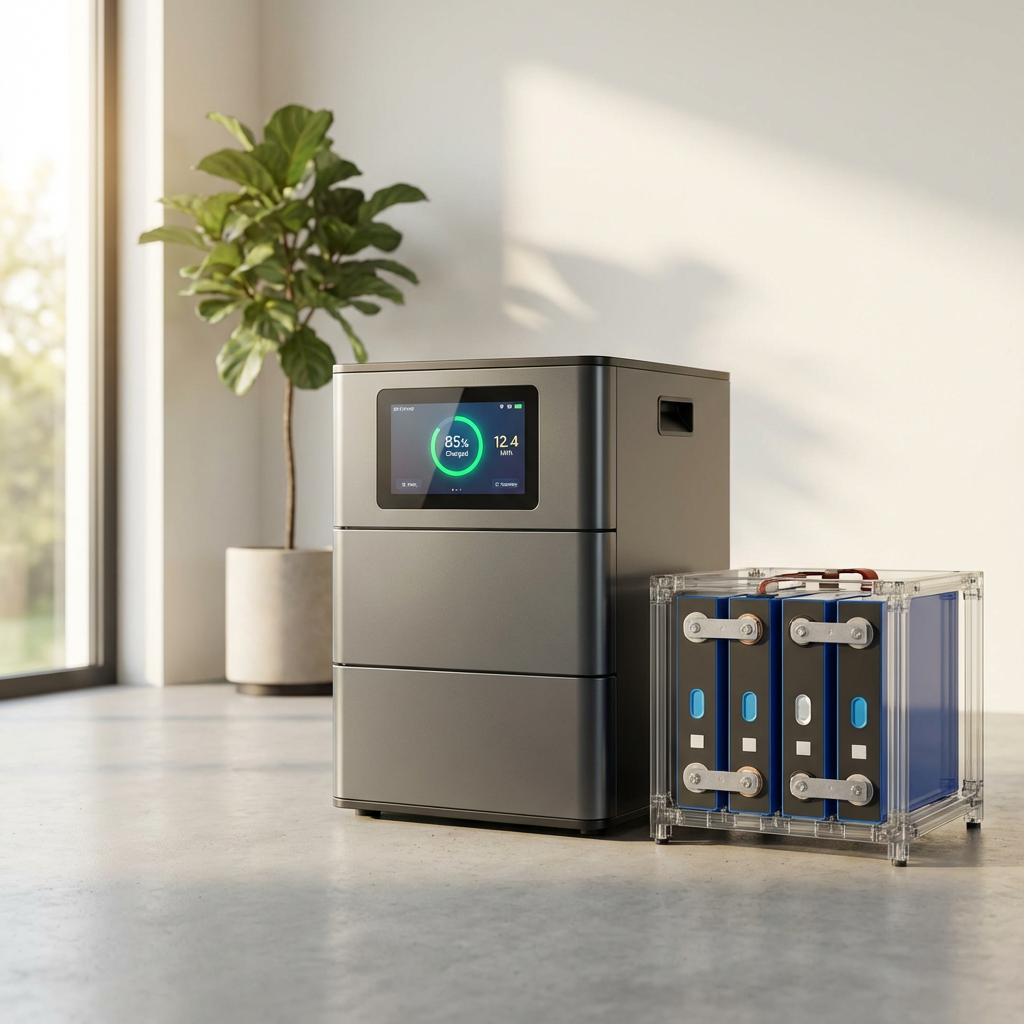
Both LiFePO4 (LFP) and NMC chemistries qualify, but KfW partners increasingly favour LiFePO4 batteries because of their superior thermal stability, longer cycle life (4,000+ cycles), and alignment with the EU Battery Regulation 2023/1542 safety requirements. Insum Energy’s LiFePO4 product range is fully compliant with IEC 62619 and VDE-AR-N 4105.
Common Mistakes That Get Applications Rejected
- Starting work before approval: The single most common reason for rejection. Do not sign installation contracts with start dates before grant confirmation.
- Using a non-approved installer: Only KfW programme partners can submit on your behalf. Always verify installer status on the KfW database.
- System size mismatch: The installed system must match the application exactly. Going larger (or smaller) invalidates the grant.
- Missing smart meter: Applications submitted without smart meter confirmation will be rejected in 2026.
- Ownership issues: Lease or PPA arrangements without clear ownership transfer don’t qualify under KfW 275 grants.
What About BEG (Bundesförderung für effiziente Gebäude) Integration?
KfW battery subsidies can be stacked with the BEG programme (Bundesförderung für effiziente Gebäude) for homeowners undertaking broader energy renovations — such as heat pump installation, insulation, or window replacement. When combining BEG + KfW 275, the total subsidy can reach €20,000–€40,000 depending on the scope of work.
However, this combination requires coordinated planning with a certified energy adviser ( Energieberater) — the process is more complex but significantly more rewarding financially.
Is 2026 the Right Time to Apply?
Yes — and here’s why. Germany’s revised Energy Economy Act (Energiewirtschaftsgesetz) and the updated EEG 2026 framework have both reinforced storage incentives. KfW programme budgets for 2026 are fully funded, and there are currently no announced phase-out dates for residential battery subsidies.
However, programme terms can change annually. Waiting risks:
- Budget caps being reached mid-year (funds are finite)
- Revised eligibility criteria
- Changes to subsidy rates
If you’re planning a solar + battery installation in Germany, applying now locks in the current rates even if the programme changes during your application window.
Ready to Start? Let Insum Energy Help
At Insum Energy, we supply premium LiFePO4 batteries and complete solar storage solutions to homeowners and installers across Germany. We work directly with KfW-certified installation partners who handle the full subsidy application process — so you can focus on the outcome, not the paperwork.
Our batteries are:
- IEC 62619 and VDE-AR-N 4105 certified
- Compatible with all major hybrid inverter brands
- Available from 5 kWh to 200+ kWh configurations
- Backed by a 10-year warranty
Get a free quote and KfW subsidy feasibility check. Our team will review your property details, recommend the optimal system size, and connect you with a certified German installer — all at no upfront cost.
👉 Contact Insum Energy today to start your KfW-subsidised solar battery project.



4 Comments