
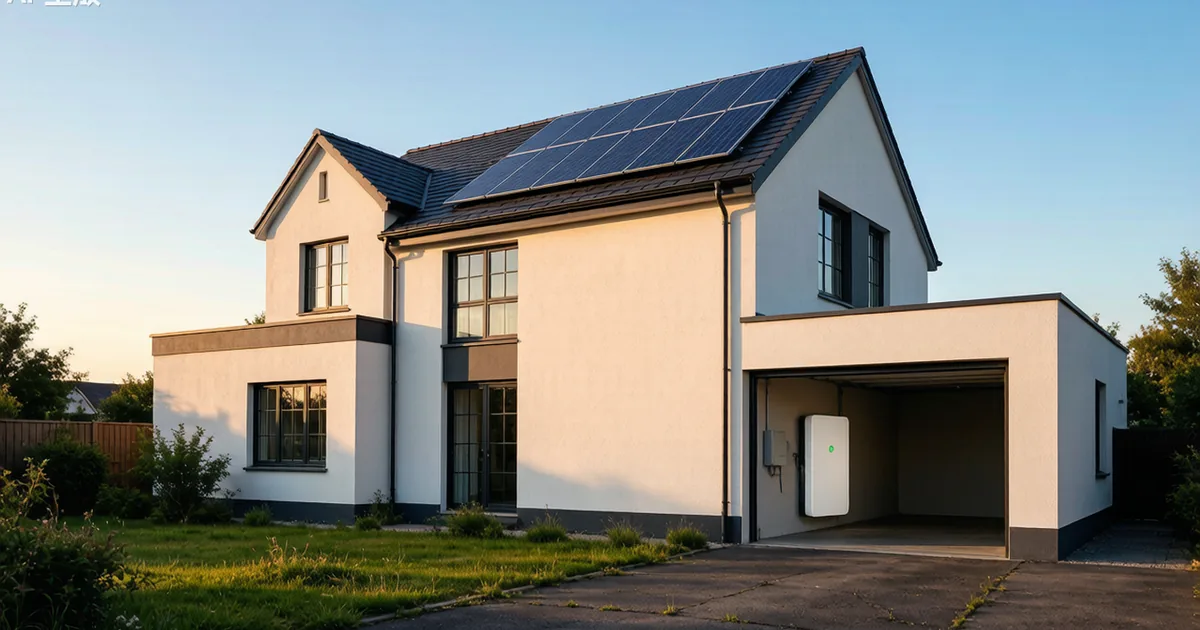
France & Italy Home Battery Subsidies 2026: Complete Guide
Why 2026 Is the Turning Point for French and Italian Home Batteries
Across the EU, 2026 is the year home battery storage shifts from “nice to have” to “must have”. France and Italy — the bloc’s second- and third-largest electricity markets — are steering households toward self-consumption with a mix of tax relief, capital grants and shrinking export tariffs. The catch: the two countries support storage in very different ways, and the paperwork is where most homeowners lose money.
Three EU rules now shape every decision. The recast Energy Performance of Buildings Directive (EU) 2024/1275 pushes solar-ready and storage-ready buildings; the Renewable Energy Directive (EU) 2018/2001, as amended by (EU) 2023/2413 (RED III), guarantees your right to self-consume and store; and the EU Battery Regulation (EU) 2023/1542 sets the passport, carbon-footprint and recycling rules that any battery sold in Europe must meet. On top of that, the Electricity Market Design Directive (EU) 2024/1711 makes it easier for a home battery to sell flexibility back to the grid. For end users, installers and distributors, that is the 2026 backdrop.
France: MaPrimeRénov’ 2026 and How Storage Fits In
France supports home energy through two separate doors: a state renovation grant and a reduced-VAT plus self-consumption framework. Understanding which door pays for a battery is the whole game.
What MaPrimeRénov’ 2026 actually covers
MaPrimeRénov’, administered by ANAH, is income-tested (from “bleu” for the lowest incomes to “rose” for higher earners) and focuses on thermal renovation — heat pumps, insulation, ventilation and heating controls. It does not pay for a lithium battery on its own; it pays for the heating systems that a battery then makes cheaper to run. The practical pairing in 2026 is: MaPrimeRénov’ for the heat pump, and self-consumption support for the photovoltaic-plus-battery system.
Reduced VAT (TVA 5,5%) and the self-consumption premium
For residential works, France applies a reduced 5.5% VAT rate to energy equipment — PV panels, inverters and associated storage — installed in homes completed more than two years ago. Self-consumption itself has long been encouraged through the “prime à l’autoconsommation” paid via EDF Obligation d’Achat, and through collective self-consumption schemes (“autoconsommation collective”) that let neighbours share electrons. Because the buyback tariff has been trimmed repeatedly, storing your own kWh is now worth more than exporting it — exactly what a LiFePO4 battery does.
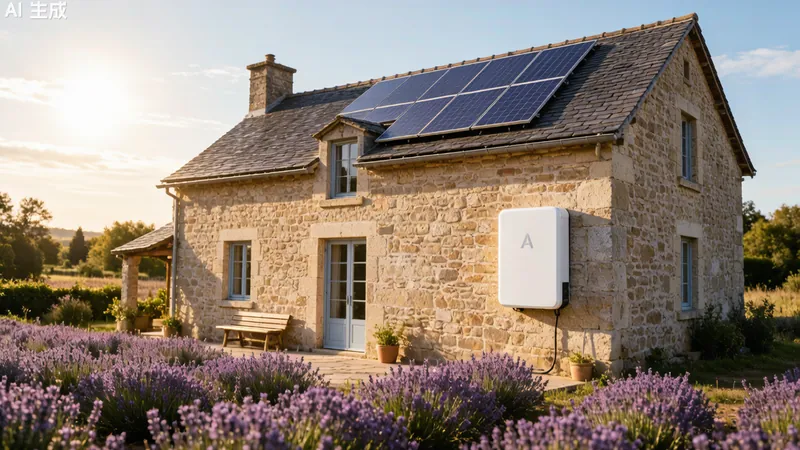
Italy: Conto Termico 2.0, Bonus Casa and the Rise of CERs
Italy runs one of Europe’s most generous — and most complex — tapestries of incentives. For 2026, three tools matter for storage.
Conto Termico 2.0 (GSE)
Conto Termico 2.0, managed by the Gestore dei Servizi Energetici (GSE), is a direct capital-contribution scheme covering roughly 40–65% of eligible costs for renewable thermal systems — heat pumps, solar thermal and efficient storage tanks — with payments spread over two to five years. It is fast, non-repayable and needs no income test, but it targets thermal generation rather than a stand-alone household lithium battery.
The 50% detrazione, Bonus Casa and energy communities (CER)
For electrical storage, Italian homeowners lean on the detrazione (tax deduction) for building works — the “Bonus Casa” and Ecobonus family, historically a 50% deduction spread over 10 years, with headline rates stepped down in recent budgets. The bigger 2026 story is the Comunità Energetiche Rinnovabili (CER). Under the EU’s market-design rules, energy communities can claim a 20-year incentive on shared production plus a capital grant of up to 40% for plants under 1 MW, funded through Italy’s PNRR. Joining a CER turns a home battery into a revenue-sharing asset.
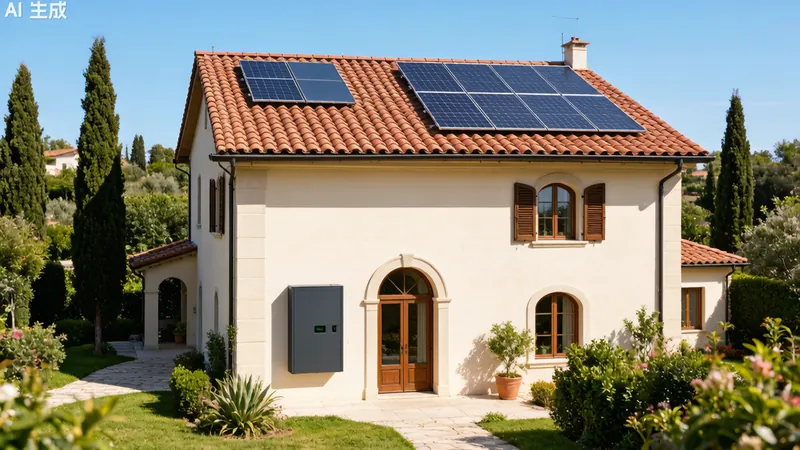
France vs Italy: 2026 Home Battery Support at a Glance
| Feature | France | Italy |
|---|---|---|
| Main grant | MaPrimeRénov’ (thermal renovation, income-tested) | Conto Termico 2.0 (GSE, thermal renewables) |
| Typical support | Up to 90% of eligible heating costs for the lowest incomes (capped) | 40–65% capital contribution, paid over 2–5 years |
| Battery-specific | Reduced 5.5% VAT + self-consumption premium and collective autoconsommation | 50% detrazione (Bonus Casa / Ecobonus) + CER incentives |
| Income test | Yes, for MaPrimeRénov’ | No, for Conto Termico |
| Best 2026 strategy | Heat pump via MaPrimeRénov’ + PV and battery via VAT and autoconsommation | Heat pump via Conto Termico + battery via detrazione and energy community |
Both countries now reward self-consumption over export. France leans on VAT and a national premium; Italy leans on thermal capital grants plus energy communities and a tax deduction. For a distributor, the sales pitch differs by market — the hardware does not.
What a Home Battery Actually Saves in €
Take a typical 10 kWh LiFePO4 battery in a household that uses 4,500 kWh a year with a 4 kWp PV array. The battery lifts self-consumption from roughly 35% to around 70%, shifting about 1,500 kWh a year away from the grid.
Indicative 2026 electricity prices across the EU
| Market | Reference index | Indicative household import price |
|---|---|---|
| Germany | EPEX day-ahead wholesale | €0.35–€0.42/kWh |
| France | CRE regulated tariff (TRV) | €0.20–€0.27/kWh |
| Italy | ARERA protected service (above the PUN wholesale price) | €0.28–€0.33/kWh |
| Spain | PVPC (day-ahead linked) | €0.12–€0.20/kWh |
| Netherlands | EPEX-linked dynamic tariffs | €0.25–€0.35/kWh |
At an all-in import price near €0.25/kWh in France and €0.30/kWh in Italy, 1,500 kWh of avoided imports is worth roughly €375–€450 a year. Add export value and flexibility revenue — dynamic tariffs, virtual power plants and CER schemes — and payback typically lands in the 6–9 year range, comfortably inside a LiFePO4 battery’s 10–15 year design life. Our EU solar and battery ROI comparison runs the same numbers for Germany, Spain, Italy and the Netherlands.
Beyond France and Italy: Other 2026 EU Subsidy Examples
- Germany — subsidised solar-plus-storage financing through the KfW solar battery subsidy programme (Programme 270), plus state-level top-ups such as Bavaria’s.
- Netherlands — the ODE surcharge has been folded into the energiebelasting, and the salderingsregeling (net metering) is being phased out toward a feed-in model after 2026; see our Netherlands and Belgium VAT guide.
- Poland — Mój Prąd 2026 grants for PV plus storage.
- Czechia — Nová zelená úsporám (NZÚ) co-finances PV with a battery.
- Romania — Casa Verde 2026 co-finances PV and storage for households.
- Greece — rooftop PV with battery is co-financed through the national self-consumption schemes.
National rules differ, but the logic is identical: store cheap solar, avoid expensive imports. Our Belgium, Austria and Switzerland subsidy guide follows the same format for those markets.
Choosing the Right LiFePO4 Battery for French and Italian Homes
Southern-European heat is the main design constraint: a battery in a Provence garage or a Sicilian utility room can see 40°C and above in summer. Choose cells rated for continuous high-temperature operation, a BMS with robust thermal protection, and a cabinet that keeps clearances for ventilation. For French and Italian rooftops, 5–15 kWh of usable capacity covers most single-family homes, with modular stacking for later expansion.
Browse our LiFePO4 home battery systems. Insum Energy supplies prismatic-cell 48V and high-voltage units with CE marking and the documentation EU installers need for incentive claims.
Installer and Distributor Checklist for 2026
- Match the claim to the right scheme — VAT and self-consumption premium in France; Conto Termico, detrazione or CER in Italy.
- Keep the compliance file: CE marking, EU Battery Regulation (EU) 2023/1542 data and warranty terms.
- Size for self-consumption, not for export.
- Model the ROI in euros with country-specific prices and tariffs.
- Plan for heat: ventilation, derating and mounting position.
Get Your 2026 Quote
Subsidy rules change every budget cycle, so confirm current terms with your installer and the relevant authority (ANAH and CRE in France; GSE and ARERA in Italy) before you sign. To spec a LiFePO4 system that qualifies for EU incentives, contact Insum Energy or learn more about us. We provide the capacity, certifications and documentation installers and distributors need to unlock 2026 subsidies in France, Italy and across the EU.


One Comment
Comments are closed.