
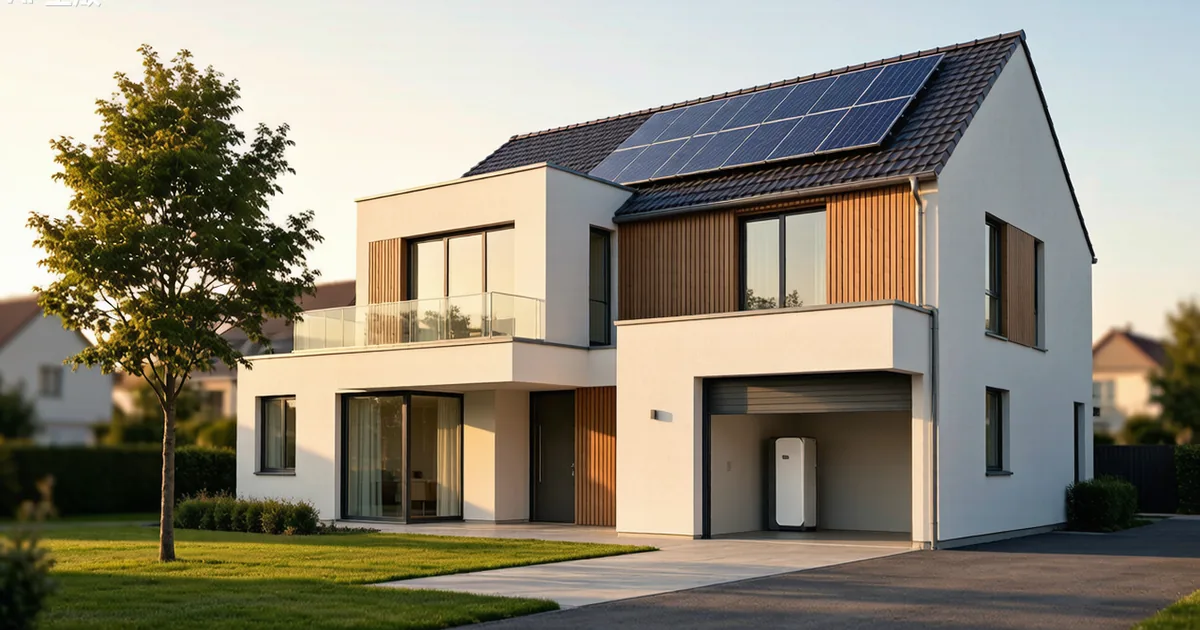
Solar + Battery ROI in the EU 2026: 4 Countries Compared
Home battery storage has moved from early-adopter gadget to mainstream renovation across the European Union — but the payback period you should expect depends enormously on which country you live in. In 2026, the same 10 kWh LiFePO4 system can pay back in under six years in one member state and take well over a decade in another.
This guide compares solar + battery ROI in Germany, Spain, Italy and the Netherlands, using 2026 retail prices, feed-in compensation and public subsidy schemes. Every figure is in euros (€) and reflects the reality EU homeowners, installers and distributors face today.
Why Battery ROI Diverges So Sharply Across the EU
Four variables move the payback calculation more than anything else:
- Retail electricity price — the €/kWh you avoid paying when you use stored solar instead of grid power.
- Export or feed-in value — what the grid pays for surplus kWh. The lower it is, the more a battery is worth.
- Public incentives — grants, tax deductions and reduced VAT.
- Tariff structure — dynamic and time-of-use pricing lets a smart battery arbitrage the daily price spread.
As export values fall across Europe, self-consumption becomes the dominant source of value. That is exactly the shift the net metering phase-out across Europe is driving in 2026.
The Simple Battery ROI Formula
Before comparing countries, it helps to see the maths every installer should run:
Annual saving = (self-consumed kWh × retail price) + (shifted kWh × tariff spread) + (subsidy ÷ system life) − (export value lost × exported kWh)
A 5–10 kWh battery with smart energy management typically shifts 1,500–2,000 kWh per year. The higher your retail price and the lower your export value, the faster the payback.
Germany: High Prices, Falling Export Value, Strong Financing
German households paid roughly €0.35–0.37 per kWh in 2026 (the BDEW average was about 37 ct/kWh, with new-customer offers near €0.348/kWh after grid-fee relief). The EEG feed-in tariff has fallen sharply — around 7.78 ct/kWh for partial feed-in on systems up to 10 kWp in 2026 — and the fixed tariff ends for new small systems from 2027. That gap, paying €0.35 for grid power but earning under €0.08 for exports, makes every stored kWh worth roughly four times an exported one.
Germany also removed VAT on solar and battery systems, and KfW still offers low-interest financing (KfW 270) plus income-based repayment subsidies (KfW 442/458). Mandatory dynamic tariffs under Section 41a EnWG, now priced quarter-hourly on EPEX Spot, add a second revenue layer.
Typical payback: 6–9 years for a well-sized system.
Spain: Cheap Power, a Huge Price Spread, Soaring Battery Attach Rates
Spain can look like the opposite problem: wholesale prices are so low at midday that PVPC households may see €0.03–0.05/kWh, while evening peaks reach €0.20/kWh or more. The average PVPC price sits near €0.11–0.13/kWh, but the intraday spread is the widest in Europe.
Feed-in compensation under the simplified self-consumption regime (Royal Decree 244/2019) is only €0.04–0.12/kWh, so exports are barely worth selling. It is no surprise that battery attach rates on Spanish residential solar climbed from around 25% in 2023 to roughly 45% in 2026. Add IRPF income-tax deductions of 20–60% of installation cost, municipal IBI property-tax cuts and reduced electricity VAT, and the net cost drops fast.
Typical payback: 5–8 years.
Italy: Europe’s Highest Prices and a 50% Tax Deduction
Italy remains one of the most expensive markets in Europe, with all-in residential tariffs around €0.30–0.34/kWh (ARERA’s protected-tariff reference was about 30.24 ct/kWh from April 2026, and the PUN energy component near €0.159/kWh). The three-band structure (F1 peak, F2/F3 off-peak) gives a battery clear price signals to work with.
The Superbonus is gone, but PV plus storage still qualifies for the 50% detrazioni fiscali tax deduction spread over ten years, and Decree No. 42 of April 2026 added fresh funding for storage and self-production. Conto Termico 2.0 continues to support the heat-pump side of electrification.
Typical payback: 6–9 years, faster when combined with the heat-pump deduction.
Netherlands: The Net-Metering Cliff Fast-Tracks Storage
The Dutch case is the most dramatic. The salderingsregeling ends on 1 January 2027; from then, exported solar earns at most 50% of the bare supply rate, and suppliers may add feed-in costs. Households that used their grid connection as a virtual battery suddenly lose that benefit — estimated to raise a typical bill by roughly €184 to €1,000 a year depending on system size.
Retail prices stay high at roughly €0.24–0.30/kWh, and there is no national subsidy for a standalone home battery (ISDE covers heat pumps, not storage). What does help: 0% VAT on batteries installed with solar, the Nationaal Warmtefonds energy-savings loan up to €8,500, and a scattering of municipal grants. A 5–10 kWh system costs €4,000–€10,000 installed, with reported paybacks around 6–10 years — closer to six when a smart EMS also trades the imbalance and dynamic-tariff markets.
Typical payback: 6–10 years.
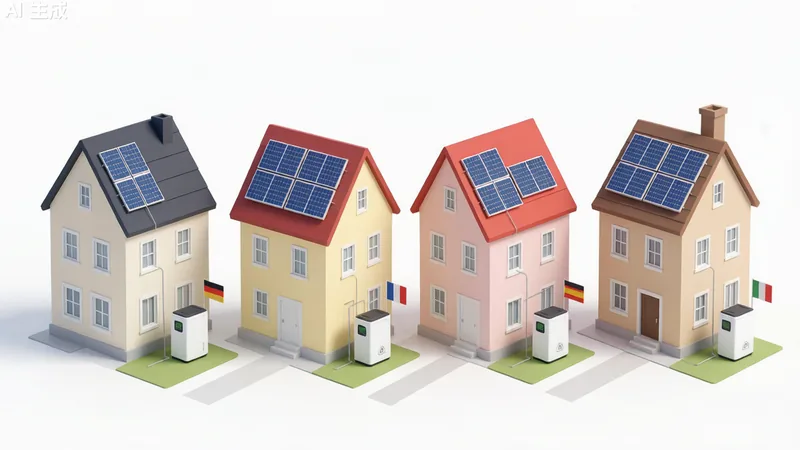
Side-by-Side: Home Battery ROI in Four EU Markets (2026)
| Metric | Germany | Spain | Italy | Netherlands |
|---|---|---|---|---|
| Retail electricity price | ~€0.35/kWh | ~€0.11–0.13/kWh (PVPC avg) | ~€0.30–0.34/kWh | ~€0.24–0.30/kWh |
| Feed-in / export value | ~€0.078/kWh | ~€0.04–0.12/kWh | ~€0.10–0.15/kWh | ≥50% of supply rate from 2027 |
| Export vs retail gap | Very high (~4×) | Very high | High | Rising fast |
| Key incentive | 0% VAT + KfW financing | IRPF 20–60% + IBI cuts | 50% tax deduction | 0% VAT + low-interest loan |
| Dynamic / TOU tariff | Mandatory, quarter-hourly | PVPC hourly | F1/F2/F3 bands | Widely available |
| Typical 10 kWh system cost | €7,000–€11,000 | €5,500–€8,000 | €6,000–€10,000 | €5,000–€10,000 |
| Estimated payback | 6–9 yrs | 5–8 yrs | 6–9 yrs | 6–10 yrs |
Figures are indicative 2026 ranges for a well-sized residential system. Always verify current tariffs and subsidy rules before quoting.
What Actually Shortens Payback
- Match capacity to real surplus. Oversizing a battery that is never fully cycled destroys ROI.
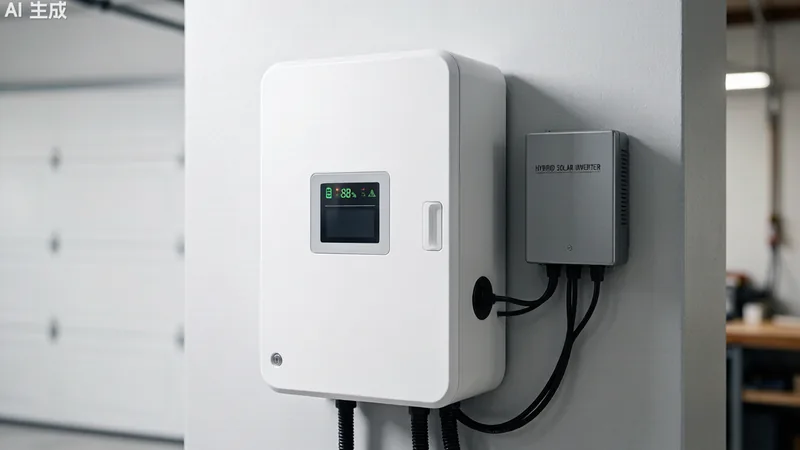
- Add smart energy management. Dynamic tariffs and imbalance-market trading can cut payback from ten years to about six, as seen in the Netherlands and Germany — see our guide to EU dynamic electricity tariffs and LiFePO4 optimisation.
- Use every incentive. A 50% Italian deduction or a Spanish IRPF rebate changes the net cost more than any hardware tweak.
- Choose durable cells. LiFePO4 chemistry, high round-trip efficiency and a 10-year-plus warranty keep the savings compounding.
The EU Policy Backdrop for 2026
Three EU-level rules shape every national scheme:
- Electricity Market Design Directive (EU) 2024/1719 — obliges member states to offer dynamic contracts and enables flexibility markets.
- Renewable Energy Directive (EU) 2023/2413 — sets the framework for self-consumption and renewable energy communities.
- Battery Regulation (EU) 2023/1542 — adds carbon-footprint, recycled-content and digital battery-passport duties installers must plan for.
Together they push the market toward flexibility: the country that rewards stored energy best in 2026 is the one where dynamic pricing, a wide price spread and a shrinking export value meet in the middle.
The Bottom Line for EU Buyers and Installers
There is no single “European” battery ROI. Spain and Germany currently offer the strongest self-consumption economics, Italy rewards investment through tax deductions, and the Netherlands is about to make storage near-mandatory as net metering disappears. In every market the winning formula is the same: size the battery to real household surplus, pair it with dynamic tariffs and a proven LiFePO4 platform, and claim every subsidy you qualify for.
Get a Quote for Your Market
Insum Energy supplies CE-certified LiFePO4 battery systems to installers, distributors and homeowners across the EU, with technical support for subsidy applications. Explore our LiFePO4 battery products, learn more about our company, or contact us for a tailored quote for your country.


2 Comments