
LiFePO4 Fire Safety: Prevention, Detection & Emergency Response
When it comes to home energy storage, LiFePO4 (Lithium Iron Phosphate) batteries are the safest lithium chemistry available. But “safer” does not mean “fireproof.” Thermal runaway incidents, while rare, can occur when LiFePO4 systems are poorly installed, improperly maintained, or exposed to extreme conditions. For homeowners, installers, and system designers, understanding LiFePO4 fire safety is not optional — it is essential.
This guide covers everything you need to know: what causes thermal runaway, how to prevent it, how to detect early warning signs, and exactly what to do in an emergency. We have based these recommendations on real incident data, UN38.3 testing standards, and field experience from thousands of installed systems.

What Causes Thermal Runaway in LiFePO4 Batteries?
Thermal runaway is a self-reinforcing cycle where rising temperature causes the battery to generate more heat, eventually leading to fire or explosion. While LiFePO4 is significantly more thermally stable than NMC or LCO chemistries (it does not release oxygen from its cathode structure until above 270°C), the risk is not zero.
The four primary causes of thermal runaway in LiFePO4 systems:
- Overcharging: The most common preventable cause. When cell voltage exceeds 3.65V per cell due to BMS or charger failure, heat generation accelerates rapidly.
- External heat sources: Prolonged exposure to temperatures above 60°C from fires, direct sunlight, or HVAC equipment can trigger thermal runaway even in healthy cells.
- Physical damage: Punctures, crushing, or severe vibrations can breach the separator and cause internal short circuits.
- Current overload: Drawing current far beyond the battery’s rated continuous/peak current causes rapid internal heating.
Prevention: The Foundation of LiFePO4 Fire Safety
Thermal runaway is preventable in nearly every case. Prevention comes down to three pillars: quality components, proper installation, and ongoing monitoring.
Use a Quality BMS with Full Protection
A Battery Management System (BMS) is your first line of defense against thermal runaway. It continuously monitors cell voltages, temperatures, and current flow, disconnecting the system when parameters go out of safe range.
A compliant BMS for LiFePO4 should include:
- Over-charge protection (cut-off ≤ 3.65V per cell)
- Over-discharge protection (cut-off ≥ 2.5V per cell)
- Over-current protection (matching inverter/charger rated current)
- Temperature monitoring on both positive and negative terminals
- Short-circuit protection with ≤250μs response time
- Cell balancing (passive or active) to prevent voltage drift
Reputable BMS brands used in residential installations include JK BMS, Daly BMS, and SEPLOS. Regardless of brand, ensure the BMS is rated for your system voltage and current.
Correct Installation Practices
Proper installation dramatically reduces fire risk. Key requirements:
- Maintain a minimum 20mm gap between battery units for convective cooling
- Install away from direct heat sources and direct sunlight
- Use correctly sized cables and terminals (loose connections generate heat)
- Mount on non-combustible or fire-rated surfaces when possible
- Do not install in living spaces or enclosed unventilated cabinets
Safe Storage Conditions
Store LiFePO4 batteries in a cool, dry, ventilated environment:
- Operating temperature range: 0°C to 45°C (charge) / -10°C to 55°C (discharge)
- Storage temperature: 10°C to 35°C
- Storage state of charge: 30%–50% SOC for long-term storage (above 3.2V per cell OCV)
- Humidity: Below 85% RH, non-condensing
Early Detection: Warning Signs and Monitoring Technology
Catching thermal runaway early is the difference between a manageable incident and a disaster. Know what to look for and invest in proper monitoring systems.
Physical Warning Signs
- Unusual odor (sweet or pungent smell near the battery)
- Swelling or deformation of the battery casing
- Hissing, venting, or clicking sounds
- Excessive heat radiating from the battery surface (above 50°C)
- Visible electrolyte leakage (brownish fluid)
If any of these signs appear, immediately disconnect the battery from all loads and chargers and move to a safe location if possible.
Technology-Based Detection

- Smoke detectors: Install photoelectric smoke detectors (not ionization-only) within 3 meters of the battery installation. For enclosed spaces, use intelligent addressable detectors.
- Temperature sensors: NTC thermistors embedded in BMS boards provide per-cell temperature monitoring. Systems with external thermistor ports allow adding ambient temperature sensors.
- VOC (Volatile Organic Compound) gas detectors: Emerging technology that detects toxic gases (HF, CO, CO₂) released during early thermal runaway stages — before smoke or heat is visible.
- BMS remote monitoring: Smart BMS units with WiFi/cellular connectivity (e.g., JBD Smart BMS) send real-time alerts to your phone when voltage, temperature, or current anomalies are detected.
Emergency Response: What to Do When Something Goes Wrong
If thermal runaway begins, every second counts. Follow this protocol precisely:
Step 1: Evacuate and Call Emergency Services
- Alert all occupants and evacuate immediately — do not collect belongings
- Call emergency services (112 / 999 / 911) and inform them of a lithium battery fire
- Stay at least 100 meters away from the battery if possible
Step 2: Disconnect Power (If Safe to Do So)
- If you can safely access the main disconnect switch or circuit breaker without entering the affected space, turn off power to prevent further charging/loading
- Do not open the battery enclosure or attempt to move damaged batteries
Step 3: Fire Suppression

Use the correct type of fire extinguisher. Water is NOT recommended for LiFePO4 fires — it can react with lithium to produce hydrogen gas and intensify the fire.
After the Fire: Critical Safety Measures
- LiFePO4 fires can re-ignite hours or even days later due to residual stored energy in damaged cells
- Burning LiFePO4 releases toxic fumes including hydrogen fluoride (HF) — seek medical attention even if you only smelled smoke
- Do not re-enter the space until cleared by fire services
- Have the area inspected by a qualified lithium battery technician before any cleanup or re-installation
Fire Extinguisher Guide for LiFePO4 Battery Systems
Not all fire extinguishers are suitable for lithium battery fires. Here is a practical comparison table:
| Extinguisher Type | Suitable? | Notes |
|---|---|---|
| Class D (Lithium powder) | ✅ Yes | Specifically designed for metal fires including lithium. Best choice. |
| ABC Powder | ✅ Yes | Effective for initial-stage battery fires. Widely available. |
| CO₂ | ⚠️ Limited | Can work on small fires but may not prevent re-ignition. |
| Foam / Water | ❌ No | Can cause chemical reaction with lithium. Never use. |
Recommended: Keep at least one Class D fire extinguisher (2kg minimum) within 5 meters of your battery installation. ABC powder extinguishers are an acceptable backup. Check pressure gauges monthly and have extinguishers professionally serviced annually.
Installation Checklist: LiFePO4 Fire Safety Requirements
- BMS installed with all protection functions enabled
- Proper wire sizing (follow manufacturer specs, typically 16AWG for 10A, 10AWG for 30A)
- Secure, tight connections (no loose terminals)
- Minimum 20mm spacing between battery units
- Photoelectric smoke detector within 3 meters
- Ventilated installation space (not airtight enclosure)
- Temperature within operating range (0–45°C)
- Class D or ABC fire extinguisher nearby
- Emergency contact numbers posted visibly
- BMS remote monitoring active (WiFi/cellular alerts enabled)
Regular Maintenance for Ongoing Safety
- Monthly: Check BMS app/display for voltage/temperature anomalies; inspect physical condition of battery housing
- Quarterly: Inspect cable connections for tightness and corrosion; verify smoke detector functionality; check ventilation paths are clear
- Annually: Professional inspection by a qualified battery system technician; thermal imaging scan of connections; verify cell balance via BMS data
- After any incident: Full system inspection before resuming operation, even if the battery appears undamaged
Conclusion: LiFePO4 Fire Safety Is in Your Hands
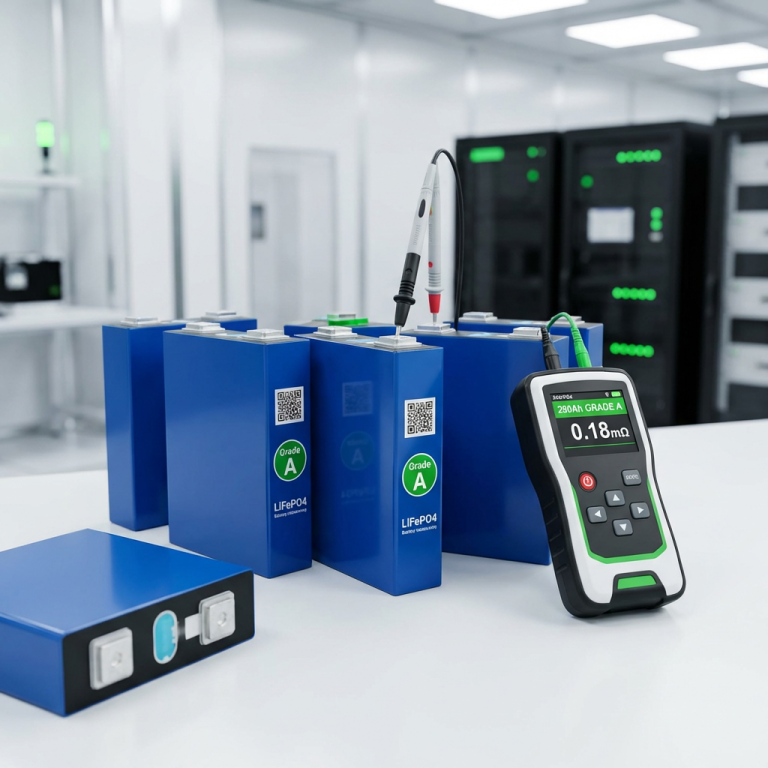
LiFePO4 batteries are the safest lithium chemistry for home energy storage, and with proper system design, installation, and maintenance, the risk of thermal runaway is extremely low. The key is proactive safety — choosing quality components like Grade A LiFePO4 cells with certified BMS protection, installing them correctly, and monitoring them continuously.
Whether you are designing a residential solar storage system, a backup power solution for your business, or an off-grid installation, fire safety is not an afterthought — it is the foundation of a reliable energy storage system.
Need help designing a safe, compliant LiFePO4 system for your project? Contact Insum Energy for expert technical consultation, custom battery pack design, and professional system recommendations. Our team has designed and delivered over 500+ residential and commercial energy storage projects across Europe and Asia-Pacific.
Explore our full range of LiFePO4 battery products — each featuring built-in BMS protection, UN38.3 certification, and comprehensive warranty coverage.
For more technical guides on LiFePO4 systems, visit our Knowledge Hub or read our About Insum Energy page to learn about our quality standards and certifications.