LiFePO4 Battery Thermal Management Design Guide: Keep Your Cells Safe and Efficient
Thermal management is the single most overlooked aspect of DIY and commercial LiFePO4 battery system design. While most builders focus on cell capacity, BMS selection, and busbar configuration, temperature control often gets treated as an afterthought — until cells degrade prematurely or, worse, a thermal runaway event occurs.
This guide covers the fundamentals of LiFePO4 thermal management, from understanding why temperature matters to designing effective cooling strategies for your energy storage system.
Why Thermal Management Matters for LiFePO4 Batteries
Although LiFePO4 chemistry is inherently safer than NMC or LCO chemistries, it is not immune to temperature-related performance loss. Operating outside the recommended temperature range — typically 0°C to 55°C for charging and -20°C to 60°C for discharging — leads to accelerated capacity fade, increased internal resistance, and reduced cycle life.
Key Temperature Risks
- High temperatures (>45°C): Doubling of degradation rate for every 10°C above 25°C. A cell that lasts 6,000 cycles at 25°C may only manage 1,500 cycles at 45°C.
- Low temperatures (<0°C charging): Lithium plating on the anode surface, causing irreversible capacity loss and potential internal short circuits.
- Temperature imbalance: Cells in a battery pack often experience different temperatures. A 5°C difference between the hottest and coldest cell can cause significant State of Charge (SoC) divergence over time.
Cooling Methods: Natural, Forced Air, and Liquid
There are three primary cooling approaches for LiFePO4 battery systems, each with trade-offs in complexity, cost, and effectiveness.

1. Natural Convection (Passive Cooling)
Suitable for low-power systems (below 1kW continuous draw) where heat generation is minimal. Design considerations include:
- Minimum 20mm clearance between cells for natural airflow
- Ventilation openings at the bottom (intake) and top (exhaust) of the enclosure
- Enclosure material with low thermal conductivity (e.g., ABS plastic with ventilation slots)
- Ambient temperature monitoring with charge/discharge cutoff at extreme temperatures
Passive cooling is adequate for most residential energy storage systems operating at C/5 to C/10 discharge rates. However, for high-current applications like EV conversion or heavy off-grid loads, forced air becomes necessary.
2. Forced Air Cooling
The most common choice for medium-to-large LiFePO4 battery systems (2-10kWh). Key design elements:
- Fan placement: Push-pull configuration (one fan pushing air in, one pulling out) provides the most consistent airflow across all cells
- CFM calculation: A general rule is 10-20 CFM per 1kW of heat dissipation. For a 5kW system, plan for 50-100 CFM total airflow
- Thermal ducting: Guide airflow through the spaces between cells, not around the outside of the pack. Baffles help distribute air evenly
- Fan control: Use temperature-triggered fans (thermostat at 35°C) rather than continuous operation to reduce dust ingress and noise
3. Liquid Cooling
Reserved for high-performance systems, electric vehicles, and large-scale commercial installations. While overkill for most DIY builds, it offers superior temperature uniformity and can handle heat loads exceeding 1kW per cell group. Cold plates, glycol-water mixtures, and heat exchangers form the core components. This approach adds significant cost and complexity but is the gold standard for applications where consistent high-power discharge is required.
Practical Thermal Design Checklist
Before assembling your LiFePO4 battery system, verify the following thermal design elements:
- Cell spacing: Minimum 3-5mm between prismatic cells; 2mm between cylindrical cells
- Thermal interface material: Apply thermal pads (1-3W/mK conductivity) between cells and heat spreaders if using active cooling
- Temperature sensors: Place at least one NTC thermistor per 4 cells, with sensors positioned on the cell surface (not in air gaps)
- BMS thermal protection: Configure over-temperature cutoff (typically 60°C) and under-temperature charge cutoff (typically 0°C for LiFePO4)
- Enclosure design: Use flame-retardant materials (UL94 V-0 rated), include thermal breakers rated for your max current
- Ambient considerations: Account for installation location — garage installations may exceed 50°C in summer without proper ventilation
Temperature Monitoring and BMS Integration
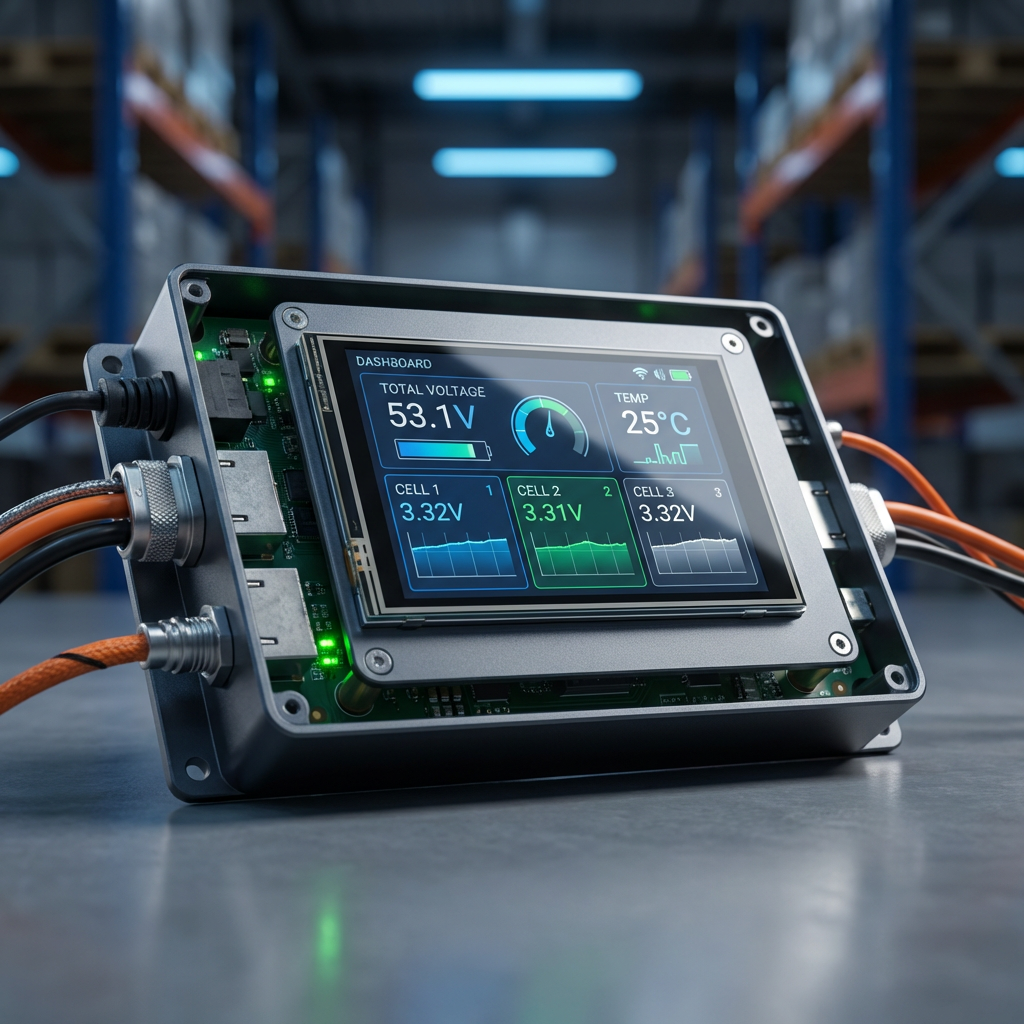
A quality BMS with temperature monitoring is non-negotiable. Systems like the JK BMS, Daly BMS, and JBD BMS offer multi-point temperature sensing with configurable protection thresholds. Connect temperature sensors to the center cells of your pack (where heat accumulation is highest) in addition to end-cell sensors.
For advanced setups, consider adding external temperature logging via Bluetooth or RS485 communication. This allows you to track thermal performance over time and identify cooling system failures before they cause cell damage.
Heating Solutions for Cold Climates
While cooling gets most of the attention, cold-weather operation presents equally serious challenges for LiFePO4 systems in northern climates:
- Self-heating blankets: Silicone heating pads with thermostatic control wrapped around the cell pack. Power consumption is typically 20-50W for a 5kWh pack
- Pre-charge warming: Configure your BMS to inhibit charging until cell temperatures exceed 0°C (or 5°C for optimal longevity)
- Insulated enclosures: 20-30mm foam insulation reduces heating power requirements by 40-60% in sub-zero conditions
Conclusion: Don’t Skip Thermal Design
Thermal management is not optional — it is a critical safety and longevity factor for any LiFePO4 battery system. Whether you are building a small 12V camper van battery or a large 48V home energy storage bank, investing time in proper thermal design will pay dividends in cell lifespan and system reliability.
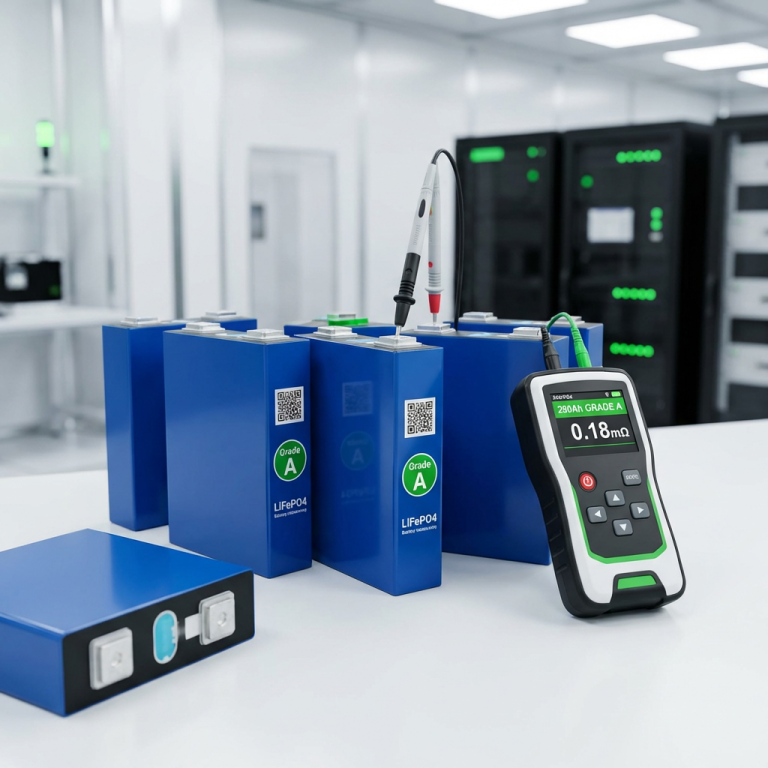
At Insum Energy, we supply Grade A LiFePO4 cells, BMS solutions, and complete DIY battery kits designed with thermal management in mind. Every kit includes detailed assembly instructions covering cell spacing, ventilation requirements, and temperature sensor placement.
Ready to build a battery system that performs reliably in any climate? Contact Insum Energy today for expert guidance on cell selection, BMS configuration, and thermal design for your specific application.