SEPLOS BMS vs JK BMS: Which Is Better for Home Energy Storage?
When building a home energy storage system, the Battery Management System (BMS) is the silent guardian that keeps your LiFePO4 battery bank running safely and efficiently. Two brands consistently dominate installer conversations: SEPLOS BMS and JK BMS. But which one truly delivers better value for your home setup in 2026?
In this guide, we put both brands head-to-head across the metrics that actually matter: cell balancing performance, communication protocols, safety features, pricing, and real-world usability. By the end, you will know exactly which BMS fits your system — and how to make the right choice without overpaying.
What Does a BMS Actually Do in a Home Energy Storage System?
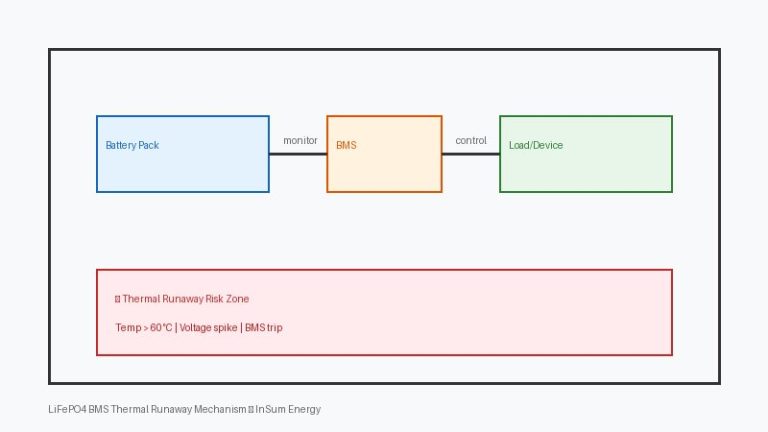
Before comparing brands, let us be clear about the role a BMS plays. A quality BMS performs several critical functions:
- Cell Balancing: Ensures all cells in a battery bank charge and discharge evenly, preventing capacity loss from cell drift.
- Overcharge/Discharge Protection: Cuts off charging above ~3.65V per cell and discharging below ~2.5V per cell to prevent permanent damage.
- Temperature Monitoring: Tracks cell temperatures and throttles or halts operation if unsafe thresholds are exceeded.
- Communication: Shares battery status data with inverters (Victron, SMA, Growatt, etc.) via protocols like CAN bus or RS485.
- State of Charge (SoC) Reporting: Calculates and reports the remaining battery percentage to your inverter or monitoring system.
Choosing the wrong BMS can mean a perfectly good LiFePO4 battery bank degrading within months, or worse — a safety incident. This is why the SEPLOS vs JK comparison matters more than most people realize.
SEPLOS BMS: Overview and Key Strengths
SEPLOS is a well-established name in the European home storage market. Their BMS units are designed with a strong emphasis on safety certification and inverter compatibility. SEPLOS BMS products are widely stocked by European distributors and come with documentation that meets strict compliance requirements.
SEPLOS BMS Core Features
- Active Cell Balancing: Most SEPLOS models include active balancing (also called flying capacitor or switching capacitor balancing), which moves charge between cells more efficiently than passive balancing. This translates to faster equalization and less energy wasted as heat.
- Certified Safety: SEPLOS units carry CE and UL certifications, making them the preferred choice for professional installers working on regulated markets like Germany, the Netherlands, and Australia.
- Multi-Protocol Support: Supports CAN bus and RS485, with pre-configured settings for major inverter brands including Victron Energy, SMA Sunny Island, and GoodWe.
- Robust Build Quality: Metal housings with efficient heat dissipation; designed for cabinet installations in indoor environments.
- User-Friendly Display: Integrated LCD screens on most models show voltage, current, SoC, temperature, and alarm status at a glance — a real advantage during commissioning.
Where SEPLOS Falls Short
- Higher Price Point: SEPLOS BMS units typically cost 20–40% more than comparable JK BMS models. For multi-stack systems, this premium compounds quickly.
- Limited Customizability: Pre-configured for popular inverters, but less flexible when integrating with less common or custom setups.
- Firmware Update Complexity: Firmware updates require a proprietary tool and Windows software, which can be a barrier for DIY installers.
JK BMS: Overview and Key Strengths
JK BMS — particularly the JK-PB and JK-B1A series — has built a cult following among both professional installers and serious DIY enthusiasts. Known for aggressive pricing without sacrificing core functionality, JK BMS dominates in markets where price sensitivity is high.
JK BMS Core Features
- Versatile Protocol Support: JK BMS supports CAN bus, RS485, and RS232, with an extensive library of pre-configured inverter profiles. If your inverter exists, JK probably has a profile for it.
- Active Balancing Models Available: The JK-PB series features built-in active balancing up to 5A, one of the highest balancing currents available in this price tier.
- Bluetooth Connectivity: A unique advantage — JK BMS units can be monitored and configured via a smartphone app, eliminating the need for a physical display or computer connection.
- PC Configuration Software: Free Windows software allows deep parameter customization — balancing thresholds, voltage limits, current derating, and more.
- Competitive Pricing: JK BMS consistently undercuts SEPLOS by 20–40%, offering excellent value for 48V home storage systems.
Where JK BMS Falls Short
- Certification Gaps: JK BMS products often lack CE/UL certification out of the box. For regulated EU or Australian markets, this can be a dealbreaker.
- Documentation Quality: User manuals and inverter integration guides are frequently translated poorly, creating commissioning challenges.
- Customer Support: Direct support from JK is limited. Installers rely heavily on community forums (DIY Solar Forum, Victron Community) for troubleshooting.
Head-to-Head Comparison: SEPLOS BMS vs JK BMS
The following table summarizes the key comparison points:
| Feature | SEPLOS BMS | JK BMS (JK-PB Series) |
|---|---|---|
| Balancing Type | Active (up to 3A) | Active (up to 5A) |
| Communication Protocols | CAN, RS485 | CAN, RS485, RS232 |
| Bluetooth Monitoring | No (LCD display only) | Yes (app + PC software) |
| Certifications | CE, UL | CE (some models); most lack certification |
| Display | Integrated LCD | None (app-based or add-on display) |
| Inverter Compatibility | Major brands (Victron, SMA, GoodWe) | Very wide range, community-driven profiles |
| 48V System Price | $$$ (premium) | $$ (value) |
| Firmware Updates | Proprietary Windows tool | PC software (free) |
| DIY Friendliness | Moderate | High |
| Professional Installer Fit | Excellent | Good (with caveats) |
Which BMS Should You Choose for Your Home Storage System?
Choose SEPLOS BMS if:
- You are a professional installer working in the EU, UK, or Australia where CE/UL certification is required for compliance.
- You prioritize reliability over cost and want a BMS backed by strong distributor support.
- Your project requires an LCD display for on-site diagnostics without needing a phone or laptop.
- You are installing a system that must meet local electrical regulations or grid connection standards.
Choose JK BMS if:
- You are a DIY installer or budget-conscious system builder looking for maximum value per dollar.
- You want Bluetooth monitoring and the ability to check battery status from your phone.
- Your system is in a market where strict certification is not a hard requirement.
- You are comfortable using community resources and forums for commissioning support.
Installation Tips: Getting the Best from Either BMS
- Use Proper Cable Sizing: Both BMS brands recommend cable gauges based on continuous current. Do not skimp on wiring — undersized cables create heat and voltage drop that corrupts SoC readings.
- Program Voltage Thresholds Carefully: For LiFePO4 cells (3.2V nominal), set charge cutoff at 3.45–3.50V per cell and discharge cutoff at 2.80–3.00V per cell for optimal cycle life.
- Enable Active Balancing: If your BMS supports it (both brands do in their active balancing models), enable balancing during both charge and discharge cycles to keep cells tight.
- Monitor Balance Current: On JK BMS, check balancing current in the app. If cells are well-matched, balancing current should be low. A consistently high balancing current may indicate a weak cell.
- Keep Firmware Updated: Check manufacturer repositories for firmware updates that may add inverter profiles or improve safety algorithms.
The Bottom Line: SEPLOS vs JK BMS in 2026
Neither brand wins universally. SEPLOS BMS earns its premium through certification compliance, robust build quality, and professional support networks — making it the safer choice for commercial and regulated residential installations. JK BMS delivers extraordinary value with high balancing current, Bluetooth convenience, and broad inverter compatibility — making it the go-to for DIY builders and cost-driven projects.
In practice, many installers use both: JK BMS for budget DIY systems and SEPLOS for certified commercial projects. The good news is that both brands are widely available, well-documented in community forums, and continuously improving with firmware updates.
If you are still unsure which BMS is right for your specific inverter and battery configuration, our team at Insum Energy can help you select the optimal configuration for your home energy storage goals. We stock both SEPLOS and JK BMS products alongside compatible LiFePO4 battery modules and hybrid inverters.
Ready to build your home battery system? Contact Insum Energy today for a personalized system quote and technical consultation.