Canary & Balearic Islands Solar Battery Subsidies 2026
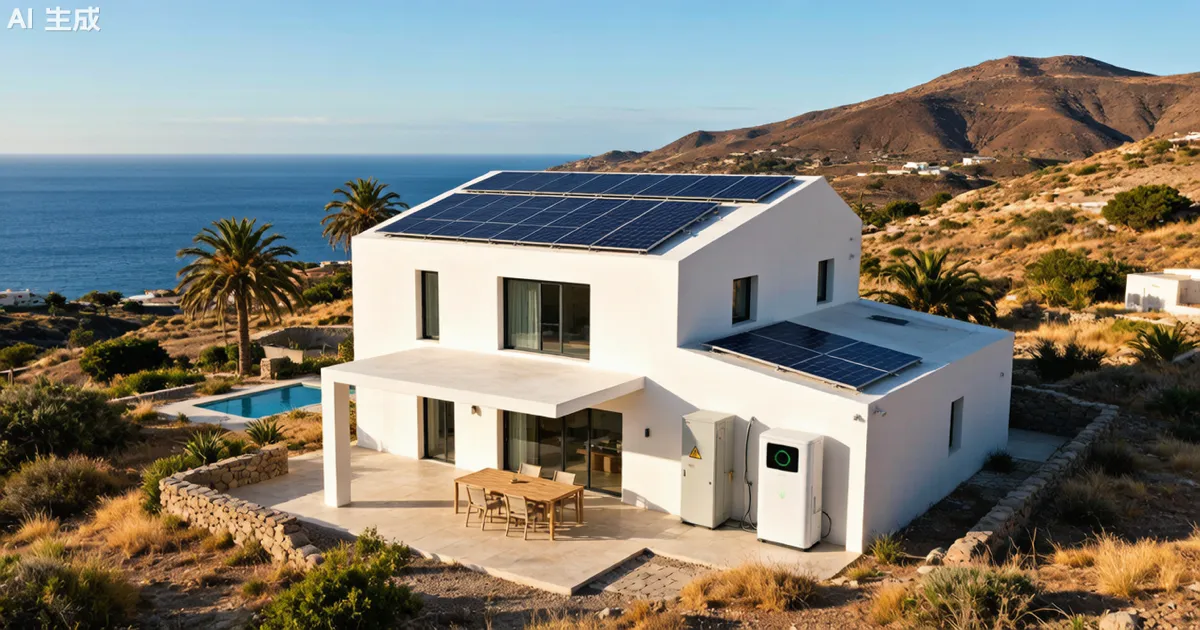
The Canary and Balearic Islands face some of the highest electricity prices in Spain — and indeed in the European Union. Isolated grid infrastructure, fossil fuel dependency, and tourism-driven peak demand push retail tariffs well above mainland averages. For homeowners and installers in these archipelagos, solar PV paired with battery storage is no longer a luxury; it is a financial necessity.
Fortunately, 2026 brings a rich stack of national and regional subsidy programs specifically accessible to island residents. From IDAE competitive auctions to Cabildo-level grants in the Canaries and Consell de Mallorca incentives in the Balearics, the support landscape has never been more favorable. This guide breaks down every active program, eligibility rules, grid connection requirements, and realistic ROI calculations — all in euros.
Why Island Solar + Battery Makes Sense in 2026
Both archipelagos share a common challenge: electrical isolation. The Canary Islands operate six independent electrical subsystems (Tenerife, Gran Canaria, Lanzarote-Fuerteventura, La Palma, El Hierro, La Gomera), none of which are interconnected with the Spanish mainland. The Balearic Islands have limited submarine cable capacity to the peninsula. This isolation means:
- Higher generation costs: Diesel and gas-fired plants still supply a significant share of island electricity, keeping wholesale prices elevated.
- Grid stability concerns: Renewable energy curtailment is common on small islands when solar production exceeds local demand midday.
- Regulatory push for storage: Battery storage directly addresses grid stability issues, making it a policy priority for both the Spanish national government and island authorities.
According to Red Eléctrica de España (REE), the Canary Islands generated 22.8% of electricity from renewables in 2025, up from 19.1% in 2024. The Balearic Islands reached 14.3%, still heavily dependent on natural gas. The Spanish government’s PNEC 2023–2030 (Plan Nacional Integrado de Energía y Clima) targets 74% renewable electricity nationwide by 2030, with specific island provisions requiring accelerated storage deployment.
National Subsidy Framework: IDAE & MITECO Programs
IDAE Competitive Auctions (Convocatoria 2026)
The Instituto para la Diversificación y Ahorro de la Energía (IDAE) administers the primary national subsidy mechanism for residential solar + storage. The 2026 convocatoria, published under Orden TED/1341/2025, allocates a dedicated island quota:
- Canary Islands: €18.5 million reserved, covering up to 45% of eligible costs (compared to 40% mainland)
- Balearic Islands: €12.3 million reserved, covering up to 42% of eligible costs
- Bonus for battery storage: Additional 8 percentage points when a battery system ≥ 5 kWh is included
- Vulnerability bonus: Additional 10 percentage points for households registered in the bono social
This means an island household installing a €12,000 solar + battery system could receive up to €11,400 in grants (45% + 8% battery bonus + 10% vulnerability = 63%, capped at €11,400). The application window opened on 15 January 2026 and remains active until funds are exhausted.
MITECO Direct Grants (Real Decreto-ley 8/2025)
The Spanish Ministry for Ecological Transition (MITECO) provides direct grants under RD-ley 8/2025 for self-consumption installations on non-mainland territories. These grants are structured as fixed amounts per kW installed:
| Component | Canary Islands (€/kW) | Balearic Islands (€/kW) |
|---|---|---|
| Solar PV | €420 | €380 |
| Battery storage | €310/kWh | €280/kWh |
| Inverter (hybrid) | €180 | €160 |
These direct grants can be combined with IDAE funding, but total support cannot exceed 65% of the project cost (75% for vulnerability households).
Canary Islands: Cabildo & Regional Programs
Tenerife — Cabildo Solar Program
The Cabildo de Tenerife launched a €4.2 million solar storage program in early 2026, administered through Agencia Insular de Energía de Tenerife (AIET). Key parameters:
- Grant: Up to €2,800 per residential battery system (5–15 kWh)
- Eligibility: Existing or new solar PV installations ≤ 15 kWp
- Priority: Households in municipalities with grid stability issues (Guía de Isora, Santiago del Teide, Vilaflor)
- Application deadline: 31 October 2026
Gran Canaria — SPEGC Storage Incentive
The Sociedad de Promoción Económica de Gran Canaria (SPEGC) offers rebates of €1,500–€3,500 for battery systems between 5–20 kWh. The program requires smart inverters compliant with UNE-EN 50549-1:2019 to ensure grid support capabilities. This aligns with broader EU grid-forming requirements that grid-forming inverters are becoming mandatory for island grids.
La Palma & El Hierro — 100% Renewable Islands
El Hierro, already famous for the Gorona del Viento wind-pumped hydro plant, received €2.1 million in 2026 for residential battery grants covering up to 55% of battery costs. La Palma’s recovery program (post-volcanic eruption) includes a €1.8 million allocation for solar + storage, with grants up to €4,500 per household.
Balearic Islands: Regional Support
Consell de Mallorca — Ecohabita 2026
The Ecohabita 2026 program provides up to €3,200 for battery storage when installed alongside solar PV. The program has a total budget of €5.5 million and specifically targets:
- Households in the parc natural de Tramuntana area with unreliable grid access
- Buildings older than 20 years undergoing energy renovation
- Properties with existing solar thermal installations adding PV + battery
Menorca — Biosphere Reserve Storage Fund
As a UNESCO Biosphere Reserve, Menorca receives dedicated EU funding through the LEADER program. The 2026 allocation is €1.6 million, providing grants of €2,000–€5,000 for battery systems. The program requires that at least 70% of annual electricity consumption come from the solar + storage system.
Eivissa & Formentera — Tourism Sector Support
The Balearic government introduced Decret-llei 6/2026, offering tax deductions of up to €6,000 for tourism businesses (hotels, agrotourism, vacation rentals) installing solar + battery systems. This is particularly impactful for Eivissa, where summer peak demand from tourism strains the local grid. Similar ROI improvements from solar + storage have been documented across EU countries, but the tourism-driven demand profile makes the Balearic case especially compelling.
Grid Connection & Net Billing Rules for Islands
Spain operates under a net billing regime (Real Decreto 244/2019), not net metering. For island residents, this has specific implications:
- Surplus export compensation: Island surpluses are compensated at the average hourly wholesale market price, which is typically €0.08–0.14/kWh in the Canaries (2026 average) and €0.09–0.13/kWh in the Balearics.
- Self-consumption priority: Under RD 244/2019 Art. 14, self-consumed energy is valued at the full retail tariff (€0.28–0.34/kWh on islands), making self-consumption far more valuable than export.
- Battery optimization: Batteries allow island homeowners to shift solar production from low-value midday hours to high-value evening peak hours (€0.32–0.38/kWh), dramatically improving economics. This is the same peak shaving vs load shifting strategy that commercial users employ.
ROI Calculation: 10 kWh Solar + Battery on Tenerife
Here is a realistic 2026 scenario for a 3-person household in Tenerife with a 6 kWp solar array and 10 kWh LiFePO4 battery:
| Parameter | Value |
|---|---|
| System cost (solar + battery + installation) | €11,500 |
| IDAE grant (45% + 8% battery bonus) | −€6,090 |
| Cabildo de Tenerife grant | −€2,800 |
| Net system cost | €2,610 |
| Annual savings (self-consumption + export) | €1,840 |
| Payback period | ~1.4 years |
| 10-year net savings | ~€15,790 |
Even without the Cabildo grant, the payback period is only 3.0 years — thanks to elevated island tariffs that make every self-consumed kWh significantly more valuable than on the mainland.
EU Policy Context: Islands as Priority Territories
The EU Clean Energy for EU Islands Initiative, launched under the European Green Deal, designates island territories as priority zones for renewable integration. Key regulatory drivers include:
- Regulation (EU) 2018/2001 (RED II) Art. 15: Mandates simplified permitting for renewable projects on islands — reducing approval times from 6+ months to under 3 months in most cases.
- Directive (EU) 2019/944 Art. 32: Enables island energy communities to operate across regulatory boundaries, important for the Balearic Islands where海底 cable capacity is shared.
- EU Recovery and Resilience Facility (RRF): Spain’s RRF plan allocates €450 million for island energy transitions through 2026, with battery storage as an eligible category.
These measures complement national programs and make island-based solar + storage one of the most subsidized renewable segments in the entire EU — a point reinforced in broader analyses of EU island solar + battery storage strategies.
Installation Checklist for Island Homeowners
- ✅ Confirm your municipio is eligible for both national and Cabildo/Consell programs
- ✅ Request quotes from at least 3 RIEB-registered installers (Registro de Instaladores de Energía en Edificación)
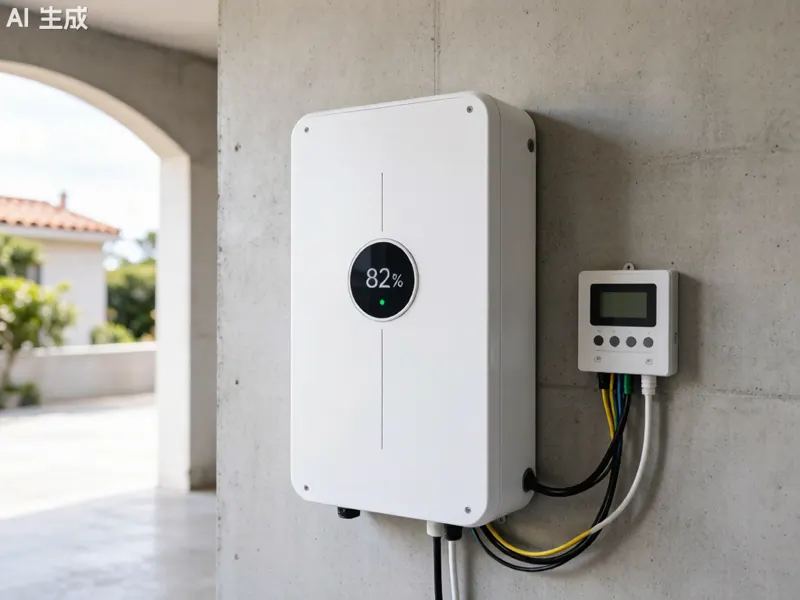
- ✅ Verify battery certification: IEC 62619, UN 38.3, and CE marking are mandatory for subsidy eligibility
- ✅ Ensure your inverter supports smart meter integration (Modbus RTU or CAN bus) for future VPP participation
- ✅ Submit IDAE application before installation begins — retroactive applications are rejected
- ✅ File comunicación previa with your local utility (Endesa in Balearics, Endesa/REE in Canaries) for grid connection modification
Conclusion: Islands Lead Spain’s Storage Transition
For homeowners and installers in the Canary and Balearic Islands, 2026 is a pivotal year. The combination of elevated retail tariffs (€0.28–0.34/kWh), generous stacked subsidies (up to 63–75% of system cost), and simplified EU island permitting createsROI profiles that mainland markets simply cannot match. With payback periods under 3 years for many configurations, the question is no longer whether to install solar + battery — it is how quickly you can submit your application before funds run out.
At Insum Energy, we supply certified LiFePO4 battery systems engineered for island conditions — salt-air corrosion resistance, high-temperature tolerance, and seamless inverter integration. Contact us today for a customized quote, or explore our product catalog to find the right battery for your island installation. Learn more about our company and our mission to power Europe’s island energy transition.