Three-Phase vs Single-Phase Home Battery: Which Should You Choose?
What Is the Difference Between Three-Phase and Single-Phase Power?
Before diving into battery systems, it’s essential to understand how your home receives electricity from the grid. In most residential properties worldwide, power is delivered through one of two systems:
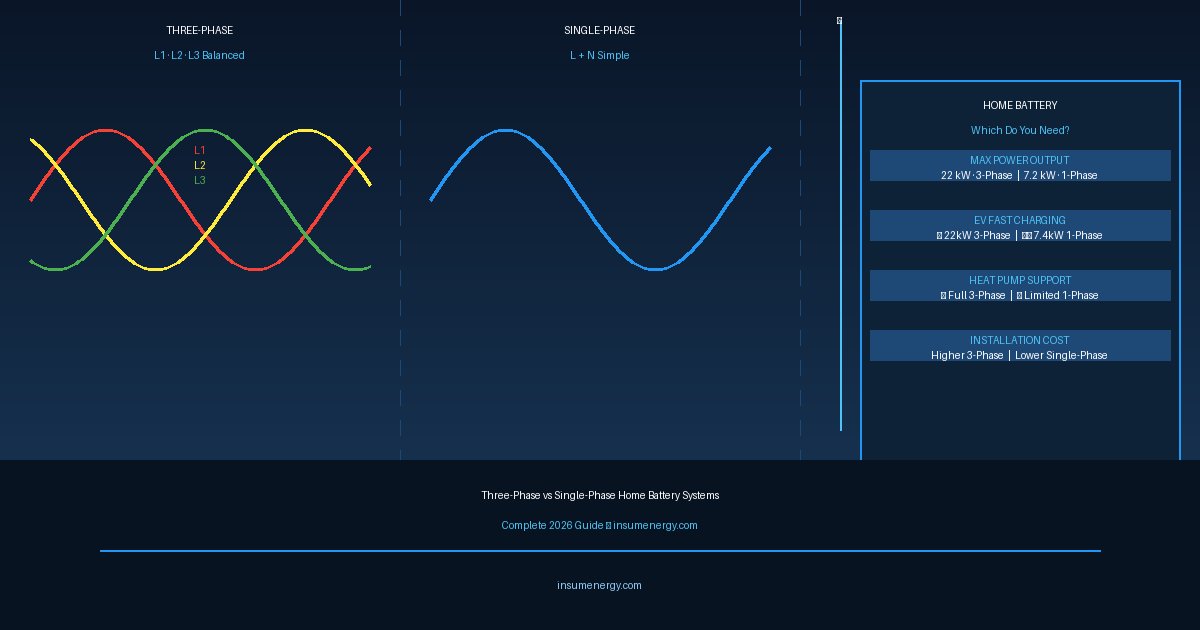
Single-phase power uses two wires — one live and one neutral — and delivers power at a single voltage. This is the standard setup for most homes in North America (120V/240V split-phase) and many countries in Europe and Asia (220V–240V). Single-phase is perfectly adequate for typical household loads: lights, refrigerators, washing machines, and general appliances.
Three-phase power uses three live wires (plus a neutral), each carrying alternating current at a different phase angle of 120°. This creates a more stable and consistent power delivery, which is why it’s standard for commercial buildings, industrial facilities, and larger residential installations. In a 400V three-phase system, the line-to-line voltage is approximately 400V, while each phase-to-neutral is around 230V.
The practical difference comes down to power capacity and balance. A single-phase home with 10kW capacity must route all that power through one pair of wires. A three-phase home can distribute the same 10kW across three separate conductors, reducing heat, reducing voltage drop, and enabling heavier loads — like EV chargers, heat pumps, or large solar inverter systems — to run simultaneously without overloading any single phase.
Why Does This Matter for Home Battery Systems?
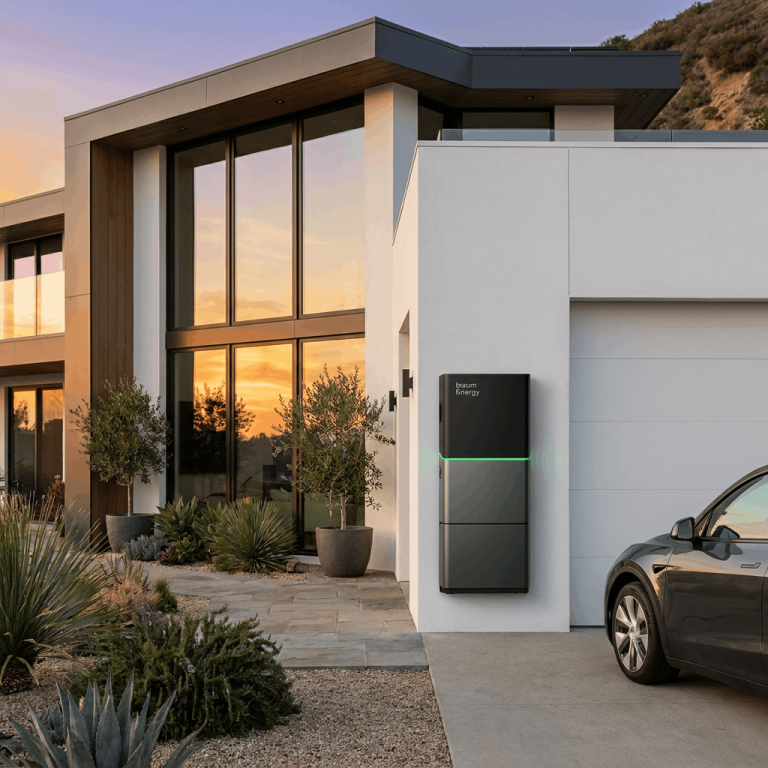
Your home battery storage system sits between your solar panels (or the grid) and your home’s electrical panel. It must integrate with your existing electrical infrastructure. The phase configuration of your home directly impacts several critical decisions:
- Battery voltage compatibility: Higher-voltage battery systems (48V or above) pair more naturally with three-phase setups.
- Inverter sizing and output: Three-phase inverters can deliver more continuous power without phase imbalance issues.
- Grid export balancing: Three-phase systems can distribute power more evenly back to the grid.
- Future expandability: Adding an EV charger, pool heat pump, or second battery stack is far simpler on a three-phase system.
For a deeper understanding of how hybrid inverters handle these configurations, read our complete guide to Off-Grid vs Hybrid vs Grid-Tie Inverters in 2026.
Single-Phase Home Battery Systems
For most homeowners, a single-phase battery system is the default and often the optimal choice. If your home runs on standard 230V single-phase power and your total consumption is under 8–10 kW at peak, you don’t need three-phase infrastructure.
A typical single-phase residential LiFePO4 battery setup:
- System voltage: 48V nominal (14S configuration of LiFePO4 cells)
- Capacity range: 5 kWh to 20 kWh per stack
- Inverter rating: 3 kW to 10 kW continuous
- Stackability: Up to 4–6 parallel stacks (80–120 kWh total in some configurations)

When Single-Phase Is the Right Choice
- Standard residential home with no heavy three-phase appliances
- Peak demand under 8–10 kW
- Budget-conscious installation
- Future expansion plans limited to a few additional stacks
Single-Phase Limitation: Phase Imbalance
Single-phase battery systems connected to a split-phase (120V/240V) panel face a specific challenge: they draw and supply power on only one leg of the panel. In a typical North American home, heavy loads like an electric dryer or oven sit on one leg, while lighting and general outlets sit on the other. If your battery system only charges one leg, you may not fully utilize the battery’s capacity during partial load conditions.
Understanding your LiFePO4 battery C-rating is critical when sizing single-phase systems — a high C-rate battery can deliver more power on a single phase, but thermal management becomes a consideration.
Three-Phase Home Battery Systems
Three-phase battery systems are purpose-built for homes with higher energy demands or three-phase grid connections. These systems are particularly common in Europe (especially Germany, Netherlands, and Scandinavia), Australia, and parts of Asia where three-phase residential connections are more prevalent.
A typical three-phase residential LiFePO4 battery setup:
- System voltage: 48V per string or 200V+ high-voltage (HV) per string
- Capacity range: 10 kWh to 50+ kWh per installation
- Inverter rating: 10 kW to 30 kW continuous across three phases
- Stackability: Multiple battery stacks across phases, with current balancing

When Three-Phase Is the Right Choice
- Home with three-phase grid connection (common in Europe and Australia)
- Heavy loads: EV chargers (>7 kW), electric heat pumps, commercial kitchen equipment
- Multi-unit properties or small commercial installations
- Desire to export high power back to the grid
- System design requires balanced phase loading
Three-Phase Advantages for Battery Storage
Three-phase systems allow your battery to charge and discharge across all three live conductors simultaneously. This means:
- Higher total power throughput without overloading any single conductor
- More efficient use of solar inverter capacity — especially important for systems above 10 kW
- Better grid integration and compliance in markets with strict export limits per phase
- Easier integration with three-phase hybrid inverters from brands like Victron, SMA, Sungrow, and Huawei
To understand how solar inverters maximize power output in three-phase setups, see our MPPT Algorithm Explained guide.
Three-Phase vs Single-Phase: Direct Comparison
| Feature | Single-Phase System | Three-Phase System |
|---|---|---|
| Grid Connection | 120V/240V (NA) or 230V (EU/Asia) | 400V three-phase (EU) or 120V/208V (NA) |
| Typical Capacity | 5–20 kWh per stack | 10–50+ kWh per installation |
| Max Inverter Output | 3–10 kW continuous | 10–30 kW continuous |
| Phase Imbalance Risk | Moderate (single-leg loading) | Low (balanced across 3 phases) |
| EV Charger Compatibility | Limited to single-phase chargers (<7.4 kW) | Supports 3-phase chargers (up to 22 kW AC) |
| Installation Complexity | Lower — simpler wiring | Higher — requires phase-aware wiring |
| Cost | Lower upfront cost | Higher upfront cost |
| Best For | Standard homes, lower demand | High-demand homes, EV owners, off-grid |
| Expandability | Stackable but phase-limited | Highly expandable across phases |
How to Determine Your Home’s Phase Configuration
If you’re unsure whether your home is single-phase or three-phase, here are four reliable ways to check:
- Check your electricity meter: A single-phase meter typically has two wires entering it. A three-phase meter will have four wires (three live + one neutral) and often displays three phase indicators.
- Look at your switchboard (consumer unit): If you see three distinct live busbars or three groups of circuit breakers, you’re likely on three-phase. A single main switch with two thick cables suggests single-phase.
- Check your supply contract or grid connection documents: Your utility bill or connection agreement will specify your supply type.
- Ask a licensed electrician: A qualified electrician can confirm your phase configuration and assess your maximum demand — essential information before sizing any battery system.
Choosing the Right Battery System for Your Phase Setup
The “right” battery system depends on a combination of factors beyond just your phase configuration. Here’s a practical framework for decision-making:
Step 1: Assess Your Daily Energy Consumption
Review 12 months of electricity bills to understand your average daily kWh consumption. A typical European home uses 8–15 kWh/day; a North American home with air conditioning can use 25–40 kWh/day. Your battery should cover at least 50–80% of your daily consumption to provide meaningful savings and backup capability.
For detailed guidance on calculating the right system size, read our How to Size a Solar Battery System in 2026 guide.
Step 2: Identify Peak Demand Loads
List any appliances that draw more than 3 kW: EV chargers, electric ranges, water heaters, air conditioners, or pool pumps. These determine whether you need a high-power inverter and whether three-phase becomes necessary. If you’re installing an EV charger at home, the decision between single-phase and three-phase becomes critical — a 22 kW three-phase charger needs a three-phase battery system to balance the load properly.
Step 3: Match Battery Voltage to Your Inverter
Ensure your battery’s nominal voltage aligns with your inverter’s input range. Most single-phase hybrid inverters accept 40V–60V (48V nominal) battery systems. Three-phase inverters often support both 48V low-voltage and 100V–500V high-voltage battery strings. Using a mismatched voltage void warranties and can cause inverter faults.
For battery sizing in different conditions, see our LiFePO4 Battery Sizing for Cold & Hot Climates guide.
Step 4: Plan for Future Expansion
If you’re considering an EV purchase, heat pump installation, or home expansion, lean toward the larger system now. Adding a second battery stack to an existing inverter is far cheaper than replacing the entire inverter later.
Common Mistakes to Avoid
- Undersizing for three-phase homes: A three-phase home with a single-phase battery system will always be limited to one phase — wasting the benefit of your three-phase connection.
- Ignoring phase balancing: In three-phase systems, ensure your battery inverter distributes load evenly across all three phases, or use a system with built-in phase balancing.
- Overbuilding a small single-phase home: Installing a 30 kW three-phase inverter in a home that never exceeds 8 kW peak demand is an unnecessary expense.
- Forgetting export limits: In markets like the UK (G99), Germany, and Australia, grid export limits are often set per phase. Three-phase battery systems with smart inverters can help you optimize export across all three phases.
- Skipping battery cycle life planning: All LiFePO4 batteries degrade over time. Understanding how to extend your LiFePO4 battery lifespan helps you plan replacement cycles and maintain system performance over 10–15 years.
Real-World Examples
Case 1: German Family Home (Three-Phase)
A family in Bavaria lives in a 180 m² home with a 10 kWp solar system and a 22 kW three-phase EV charger. Their daily consumption averages 25 kWh. They installed a 15 kWh LiFePO4 battery stack with a three-phase hybrid inverter. The system charges their EV during off-peak hours, stores excess solar, and provides 2 days of backup power. Total system cost (battery + inverter + installation): approximately €12,000–€15,000, with German KfW subsidy covering up to €10,200.
Case 2: UK Suburban Home (Single-Phase)
A couple in suburban England live in a standard 3-bedroom semi-detached home on a single-phase 100A supply. Their peak demand is 7 kW. They installed a 10 kWh LiFePO4 battery with a single-phase 5 kW hybrid inverter. The system covers 70% of their evening consumption and provides backup during grid outages. Total cost: approximately £6,500–£8,500 after UK G99 grid connection approval and VAT exemption.
The Bottom Line: Three-Phase vs Single-Phase for Home Battery
For most homeowners, a single-phase LiFePO4 battery system is the right choice — simpler to install, lower cost, and perfectly adequate for daily storage needs. It integrates seamlessly with most residential hybrid inverters and can be expanded with additional parallel stacks as energy needs grow.
However, if your home already has a three-phase connection, or if you’re planning to add high-power appliances like an EV charger or heat pump, investing in a three-phase battery system now will save you from costly upgrades later. The balanced power delivery, higher throughput capacity, and better grid export optimization make three-phase the professional choice for higher-demand households.
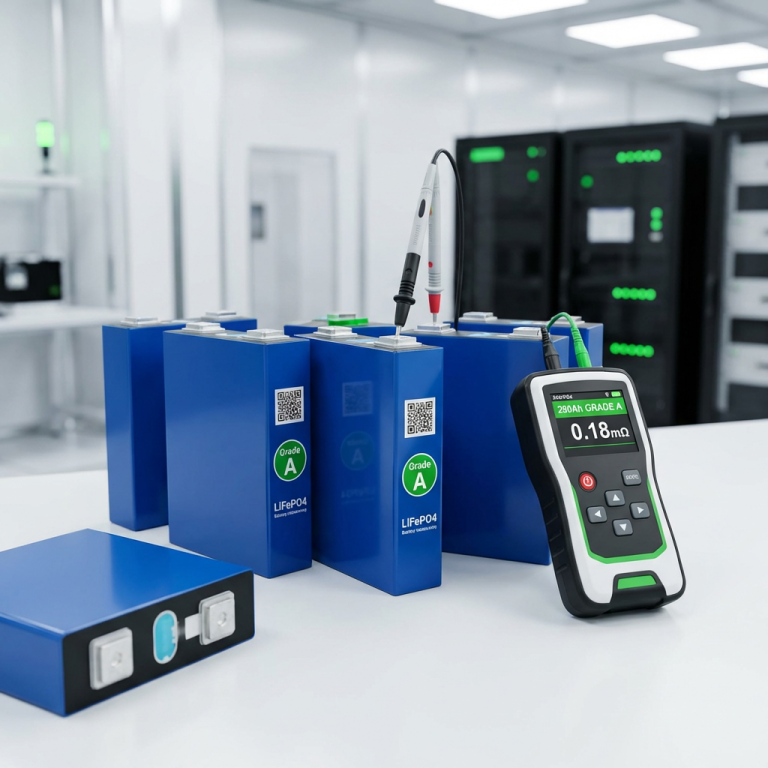
Whether you choose single-phase or three-phase, LiFePO4 battery technology delivers the best balance of safety, longevity, and performance for home energy storage in 2026. The cells offer 6,000+ cycle life at 80% depth of discharge, operate safely in a wide temperature range, and carry no thermal runaway risk under normal conditions — making them the clear winner over lead-acid for any phase configuration.
Ready to Design Your Home Battery System?
Whether you’re installing a single 5 kWh stack or a full three-phase 30 kWh system, contact Insum Energy for expert consultation on choosing the right LiFePO4 battery configuration for your home, business, or off-grid project. Our team provides tailored system design and competitive wholesale pricing on premium battery cells, BMS, and hybrid inverters.
Get in touch today for a free system assessment and quote tailored to your phase configuration and energy goals.