Apartment & Rental Battery Storage Solutions in the EU 2026
Why Apartment Dwellers Need Battery Storage in 2026
Over 46% of EU residents live in apartments, yet most home battery storage solutions are designed for detached houses. As electricity prices across Europe remain volatile — Germany’s EPEX spot market averaged €0.28–0.42/kWh in 2025, Spain’s PVPC tariff hit €0.18–0.35/kWh, and the Netherlands saw S++ peaks above €0.45/kWh — apartment residents are increasingly locked out of energy savings.
The good news? The landscape is shifting. New EU regulations, compact LiFePO4 battery systems, and national subsidy programs are making apartment battery storage not only feasible but increasingly attractive. Here’s what renters, landlords, and property developers in the EU need to know in 2026.
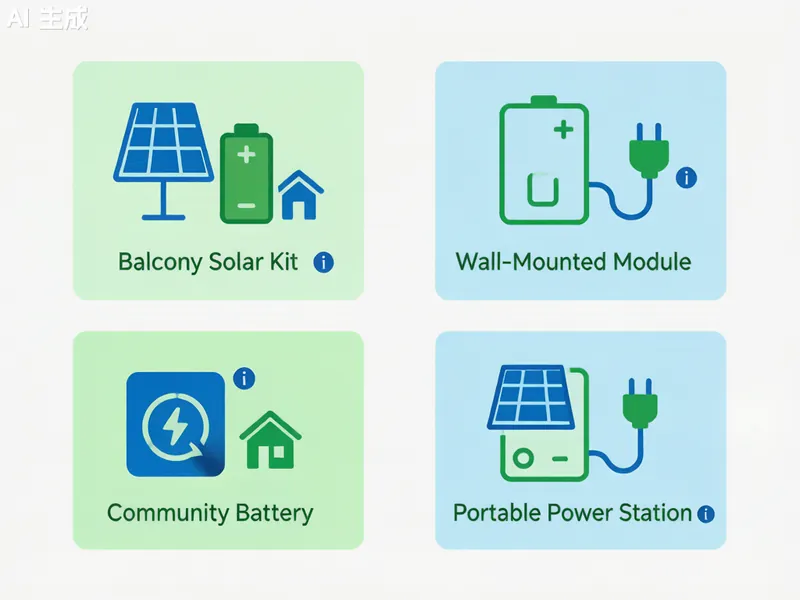
4 Apartment Battery Storage Options Available Now
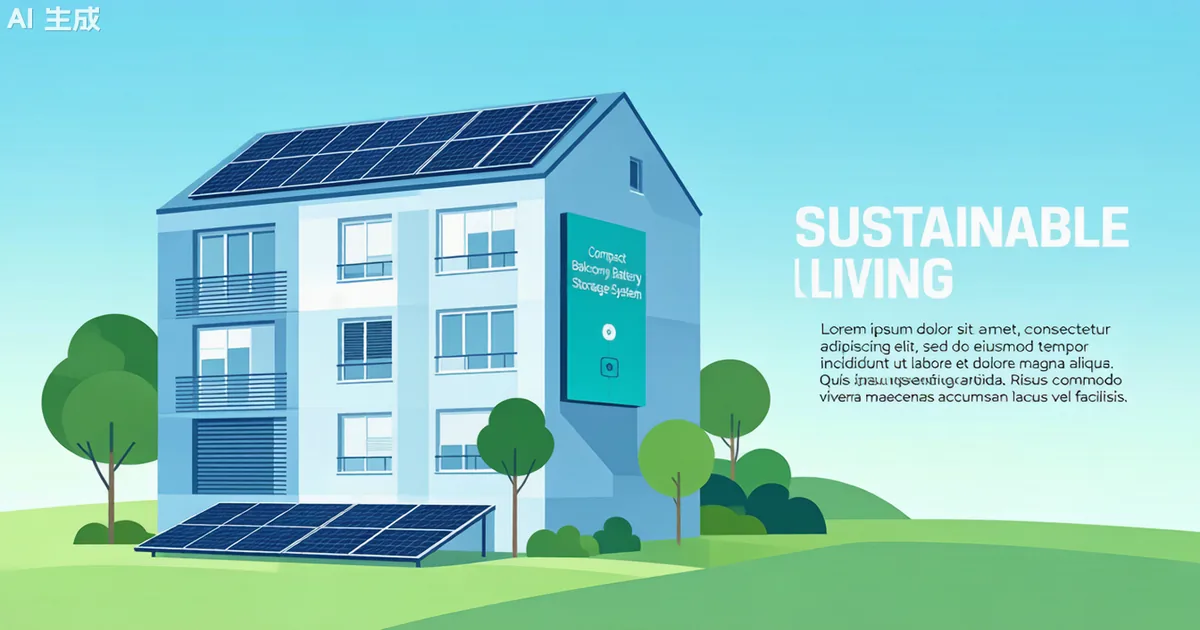
1. Balcony Solar + Compact Battery Kits
Germany’s Balkonkraftwerk (balcony power plant) market has exploded, with over 4.5 million units installed by 2025. The 2024 EU Renewable Energy Directive (RED III, 2023/2413) mandates streamlined registration for plug-in solar devices under 800W, and most EU countries have since simplified approval processes.
The natural next step is adding a compact LiFePO4 battery — typically 1–3 kWh — that stores daytime solar production for evening use. These units plug directly into standard Schuko sockets and require no electrical permit in most EU jurisdictions.
- Typical cost: €800–€2,500 (solar + battery kit)
- Self-consumption boost: 30% → 60%+ with battery
- Best for: Rented apartments with south/east-facing balconies
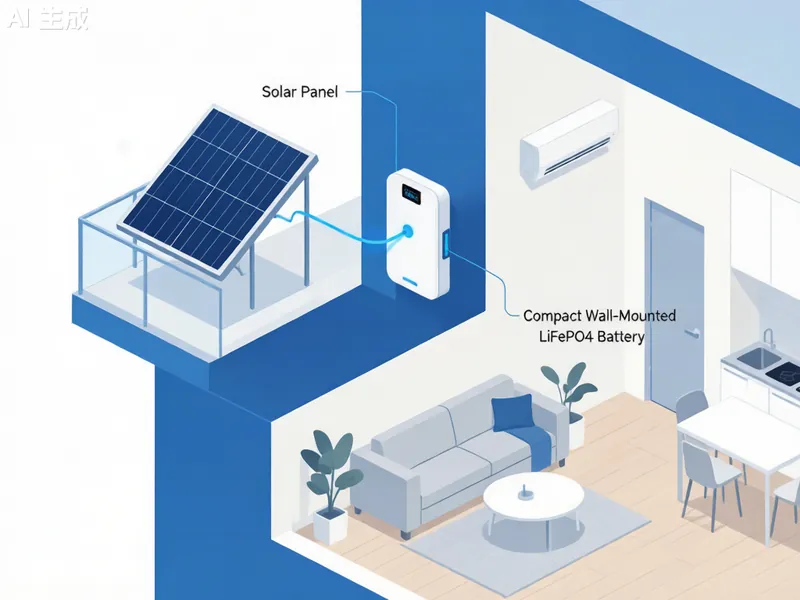
2. Wall-Mounted Modular Battery Systems
For apartment owners (not renters), wall-mounted LiFePO4 batteries in the 5–10 kWh range are now compact enough for installation in utility rooms, hallways, or basements. Major EU-relevant certifications include IEC 62619, IEC 63056, and the CE marking required under the EU Battery Regulation 2023/1542.
These systems integrate with rooftop solar where the building has it, or can charge from the grid during off-peak hours (such as Germany’s EPEX night slots at €0.08–0.15/kWh) and discharge during peak evening hours — effectively functioning as peak shaving for individual apartments.
3. Community / Shared Battery Systems
Under RED III Article 22, EU member states must enable renewable energy communities (RECs) and citizen energy communities (CECs). This legal framework allows apartment buildings to install a shared battery — typically 20–100 kWh for a multi-family building — that stores solar from rooftop installations and distributes stored energy to individual units.
Tenant electricity models (Mieterstrom in Germany) let landlords sell locally generated solar power directly to tenants at rates 10–20% below the local utility tariff, with the shared battery maximizing self-consumption. This model is gaining traction in Germany, the Netherlands, and Austria.
4. Portable Power Stations
For renters who move frequently, portable LiFePO4 power stations (1–5 kWh) offer flexibility without installation. While more expensive per kWh, they double as emergency backup and can be charged from balcony solar, grid off-peak, or even public EV charging points.
Key EU Regulations Affecting Apartment Battery Storage
| Regulation | Relevance to Apartments | Status in 2026 |
|---|---|---|
| EU Battery Regulation (EU) 2023/1542 | Safety, labelling, carbon footprint disclosure for all batteries | In force; carbon footprint declaration mandatory from Feb 2025 |
| RED III (Directive 2023/2413) | Simplified permitting for <800W plug-in solar; REC/CEC rights | Transposition deadline: July 2025 (most MS compliant) |
| Energy Performance of Buildings Directive (EPBD) 2024/1275 | Solar readiness for new buildings >260 m²; renovation standards | In force; MS must adopt by May 2026 |
| Electricity Market Design Reform (Reg. 2024/1747) | Dynamic tariffs, prosumer rights, grid access for distributed storage | In force; key provisions active Jan 2025 |
Tenant Rights and Landlord Permissions Across the EU
One of the biggest barriers to apartment battery storage is the tenant-owner relationship. Here’s how key EU countries handle it:
- Germany: Tenants have the right to install balcony solar under 600W (upscaled to 800W under RED III) without landlord permission, per §9 Mietrecht. Battery storage in rented units remains a gray area — written landlord consent is strongly recommended.
- France: Under the Loi Climat et Résilience (2021) and subsequent decrees, tenants can install plug-in solar without permission. Permanently mounted batteries require landlord agreement but may qualify for MaPrimeRénov’ 2026 (up to €4,000 for energy storage in apartment buildings).
- Netherlands: The Separable Energy Connections ruling lets apartment owners install their own solar+battery. Renters face fewer options but can use portable units freely.
- Spain: The Ley de Propiedad Horizontal was amended in 2023 to prevent communities from blocking solar installations on building roofs. Individual apartment battery storage requires community approval if it affects common areas.
- Italy: Conto Termico 2.0 supports building-level energy storage. For individual apartments, the Superbonus 110% (now phased down but still offering tax credits) can cover battery storage integrated with solar in multifamily renovations.
Subsidies and Financial Incentives for Apartment Batteries
While most national battery subsidies target detached houses, several programs specifically support apartment and multi-family buildings:
- Germany — KfW 270: Low-interest loans for multi-family building energy retrofits, including shared battery storage. Up to €150,000 per residential unit at 0.73% interest (2026 rate).
- France — MaPrimeRénov’ 2026: €4,000 for battery storage in apartment buildings (copropriété), with additional bonuses for low-income households.
- Netherlands — ODE subsidy: While the Salderingsregeling (net metering) continues its phase-out, the ODE (opwekking duurzame energie) subsidy supports apartment buildings installing shared solar+battery systems.
- Poland — Mój Prąd 2026: Extended to cover apartment buildings with shared solar+battery. Up to €2,300 (10,000 PLN) per unit for buildings with ≥3 apartments.
- Czech Republic — NZÚ: The National Environment Programme supports apartment building energy communities with battery storage, covering up to 50% of costs (max €20,000 per building).
- Romania — Casa Verde 2026: Now includes apartment-level battery storage ≥2 kWh with subsidies up to €2,000 per unit.
ROI Example: Berlin Apartment with Balcony Solar + Battery
Consider a 70 m² Berlin apartment with an 800W balcony solar kit + 2 kWh LiFePO4 battery:
- System cost: €1,800 (after VAT)
- Annual savings: €340 (increased self-consumption at €0.35/kWh peak rate vs €0.12/kWh feed-in)
- Payback: ~5.3 years
- 20-year savings: €5,600 (accounting for 3% annual electricity price inflation)
For a shared building battery (50 kWh for a 12-unit building in Amsterdam), the economics improve further due to higher self-consumption rates and avoided grid fees.
Installation Checklist for Apartment Battery Storage
- Check your balcony/window orientation — South-facing gives best solar yield; east-west still viable with battery
- Verify your fuse box — Ensure it has a dedicated circuit or available breaker slot for the battery system
- Review your lease/deed — Confirm whether landlord or building community approval is needed
- Choose certified equipment — Look for IEC 62619, IEC 63056, and CE marking
- Register the system — Most EU countries require registration in the national registry (e.g., MaStRa in Germany, REGIE in France)
- Apply for subsidies — File applications before installation to secure funding
Challenges and Limitations
Apartment battery storage isn’t without hurdles. Space constraints limit system size; fire safety regulations vary by building type; and energy community setups require legal structures that can take months to establish. Additionally, the ongoing EU Electricity Market Design Reform continues to reshape prosumer compensation — staying informed is essential.
The Future: EU Policy Push for Multi-Family Storage
The EPBD recast (2024/1275) requires all new residential buildings to be zero-emission by 2030, which effectively mandates solar + storage readiness for apartment complexes. Combined with the EU’s 42.5% renewable energy target by 2030 under RED III, this creates a strong policy tailwind for apartment battery adoption.
Get Started with Insum Energy
Whether you’re a renter exploring balcony solar kits, an apartment owner planning a wall-mounted system, or a property developer evaluating shared battery infrastructure, Insum Energy offers certified LiFePO4 battery solutions tailored for European apartments.
Ready to cut your apartment electricity bills? Contact our team for a free consultation and quote. We’ll help you navigate subsidies, choose the right system size, and ensure full EU regulatory compliance.