Emergency Backup Power: UPS vs LiFePO4 Battery — Which Is Better in 2026?
Power outages are becoming more frequent and unpredictable — from extreme weather events to grid strain during peak demand hours. When the lights go out, the difference between a minor inconvenience and a major disruption comes down to one thing: your backup power strategy.
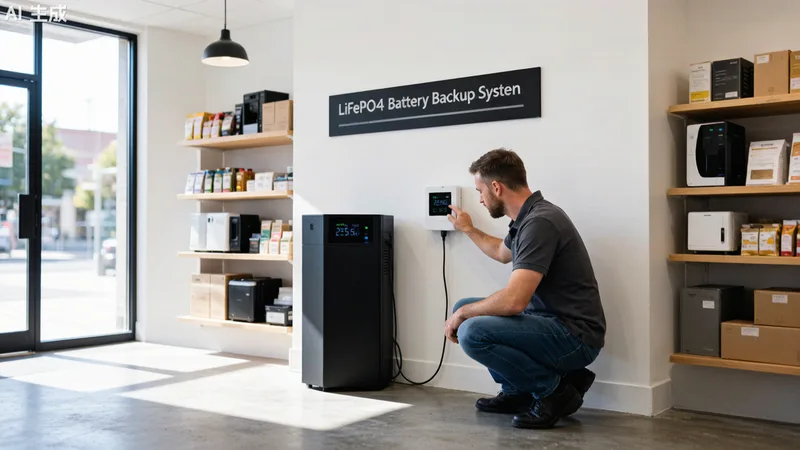
For homeowners, business operators, and facility managers, the choice now comes down to two dominant technologies: traditional UPS (Uninterruptible Power Supply) systems and modern LiFePO4 (Lithium Iron Phosphate) battery storage. Both serve as backup power, but they operate differently, cost differently, and deliver vastly different long-term value.
In this guide, we break down exactly how these two technologies compare across the factors that matter most — so you can make a confident, future-proof decision for your property or operation.
What Is a UPS System?
A UPS is a device that provides instant emergency power when the main supply fails. It sits between the utility grid and your critical loads, using stored energy in lead-acid or lithium batteries to keep equipment running without interruption.
UPS systems are widely used in data centers, server rooms, medical facilities, and industrial settings. They typically provide power for minutes to a few hours — just enough to safely shut down equipment or switch to a generator.
What Is LiFePO4 Battery Storage?
A LiFePO4 battery is a rechargeable deep-cycle battery designed for long-duration energy storage. Unlike UPS batteries, which are optimized for short bursts, LiFePO4 systems can deliver power for 4–24 hours or more, making them ideal for whole-home backup, solar integration, and off-grid living.
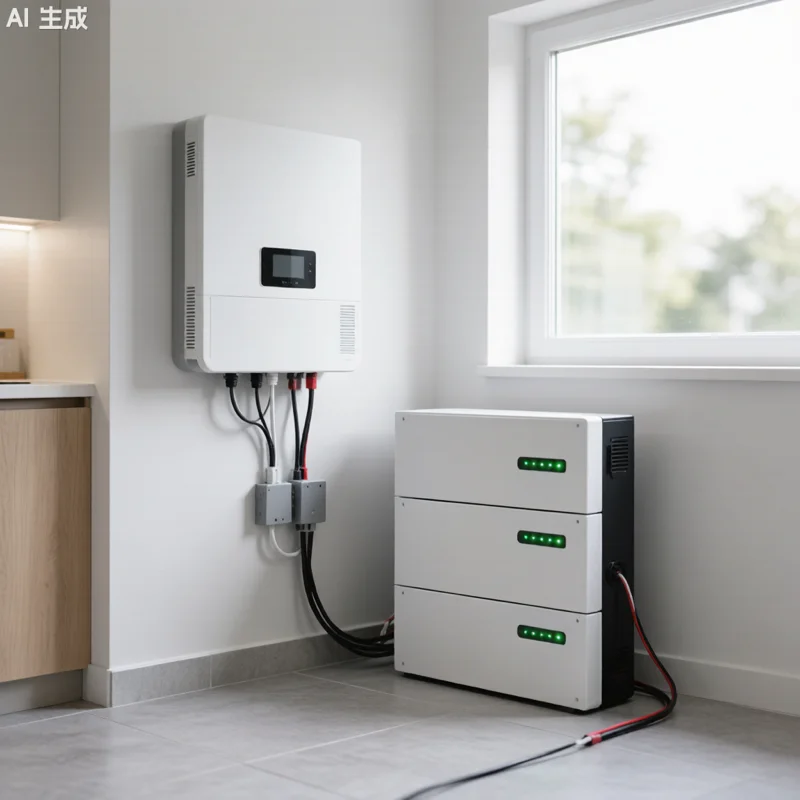
LiFePO4 chemistry (Lithium Iron Phosphate) offers superior thermal stability, longer cycle life, and a wider depth of discharge compared to traditional lithium-ion batteries, making it one of the safest battery chemistries available today.
UPS vs LiFePO4 Battery: Key Differences at a Glance
| Feature | Traditional UPS | LiFePO4 Battery System |
|---|---|---|
| Primary Use | Short-term emergency power, graceful shutdown | Long-duration backup, whole-home energy storage |
| Typical Runtime | 5–30 minutes (lead-acid UPS) | 4–24+ hours depending on capacity |
| Battery Chemistry | Sealed lead-acid (VRLA), some lithium | Lithium Iron Phosphate (LiFePO4) |
| Cycle Life | 200–500 cycles (lead-acid) | 4,000–6,000+ cycles |
| Depth of Discharge (DoD) | 40–50% recommended for lead-acid | 80–100% usable capacity |
| Maintenance | Regular battery replacement every 2–3 years | Nearly maintenance-free |
| Solar Integration | Limited or none | Designed for solar + grid hybrid use |
| Scalability | Limited — fixed capacity | Stackable modules — scale as needed |
| Weight & Size | Heavy, bulky (lead-acid units) | Compact and lightweight relative to capacity |
| Typical Cost | $200–$2,000 for consumer models | $3,000–$15,000 for whole-home systems |
| ROI Over 10 Years | Low — recurring battery replacements | High — paired with solar, bill savings |
When to Choose a UPS System
UPS units remain the right choice in specific scenarios where their characteristics provide clear advantages:
1. IT Infrastructure Protection
Data centers, network racks, and server rooms require instantaneous failover — measured in milliseconds. A UPS with pure sine wave output ensures no data corruption or hardware damage during a sudden power loss. For this use case, lead-acid UPS systems are still a cost-effective industry standard.
2. Small-Scale, Short-Term Backup
If you only need to keep a few devices running for 15–30 minutes during an outage (a desktop PC, monitor, and router, for example), a consumer UPS unit at $150–$400 is a practical and affordable solution.
3. Medical and Life-Safety Equipment
Oxygen concentrators, CPAP machines, and certain hospital-grade devices require continuous, clean power with strict waveform quality requirements. Specialized online/double-conversion UPS systems meet these standards reliably.
4. Immediate Availability Without Installation
A plug-and-play UPS can be set up in minutes. For renters or those who cannot modify electrical infrastructure, a UPS is the only viable option for backup power.
When to Choose LiFePO4 Battery Storage
LiFePO4 systems are the better investment for most residential and commercial backup power needs:
1. Whole-Home Backup
When an outage affects your entire property, a LiFePO4 system with a 10–20 kWh capacity can keep your lights, refrigerator, heating/cooling, and essential appliances running for a full day or more. A UPS simply cannot match this runtime at any reasonable cost.
2. Solar + Storage Integration
LiFePO4 batteries are purpose-built for renewable energy integration. Pairing a solar panel array with a LiFePO4 storage system creates true energy independence — your home generates and stores its own power during the day and draws from storage at night or during grid failures.
3. Long-Term Cost Savings
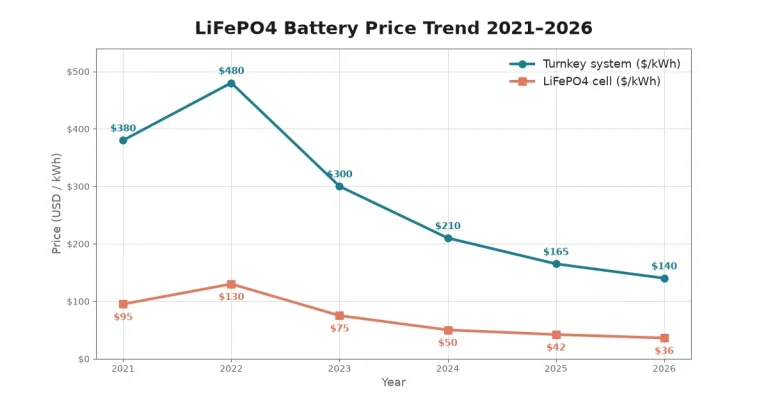
While the upfront cost of a LiFePO4 system is higher, the total cost of ownership over 10 years is often lower than repeatedly replacing UPS batteries. A LiFePO4 battery rated at 6,000 cycles at 100% DoD can last 10–15 years in typical residential use — replacing a lead-acid UPS 3–4 times in the same period.
4. Off-Grid Cabins, RVs, and Marine Applications
For properties without reliable grid access, LiFePO4 is the definitive choice. Its high energy density, lightweight form factor, and ability to operate in harsh environments make it ideal for off-grid living, recreational vehicles, and boats.
5. Businesses with Critical Operations
A restaurant, farm, workshop, or retail store that cannot afford hours of downtime needs more than a UPS can provide. A commercial LiFePO4 system rated at 20–50 kWh provides meaningful protection for operations that generate revenue around the clock.
The Real-World Cost Comparison
Let us compare the 10-year total cost of ownership for two equivalent backup scenarios: protecting a typical 3-bedroom home from power outages.
Scenario A — Traditional UPS:
- Initial cost: $800 (3,000VA line-interactive UPS)
- Battery replacement every 3 years: $250 × 3 = $750
- Replacement UPS unit at year 5: $800
- 10-Year Total: ~$2,350
- Runtime at full load: ~15–20 minutes
Scenario B — LiFePO4 Home Battery System:
- Initial cost: $5,500 (10 kWh LiFePO4 system with inverter)
- Solar panel addition (optional): $3,000–$8,000
- No battery replacement in 10 years (6,000+ cycle rated life)
- 10-Year Total: ~$5,500 (without solar)
- Runtime at 5 kW load: ~10–14 hours (off solar)
The LiFePO4 system costs roughly 2.3× more upfront but delivers 40–60× more backup runtime and eliminates recurring battery replacement costs. If you add solar panels, the system also reduces your monthly electricity bill — potentially paying for itself within 5–8 years.
Common Misconceptions
“UPS is faster — LiFePO4 takes too long to switch over.”
Modern hybrid LiFePO4 systems with built-in inverters achieve sub-20-millisecond transfer times — comparable to mid-range UPS units. Only high-end online/double-conversion UPS systems (which cost $1,500+) offer faster switching.
“Lead-acid batteries are safer than lithium.”
LiFePO4 chemistry is significantly safer than lead-acid or NMC lithium batteries. It is non-combustible, thermally stable up to 270°C, and does not experience thermal runaway under normal operating conditions. This is why it is the preferred chemistry for electric buses, marine vessels, and residential energy storage worldwide.
“A UPS is sufficient for my home.”
For most homeowners, a UPS protects one or two devices for a few minutes — enough to save a document and shut down gracefully. It does not keep your refrigerator cold, your heating running, or your security cameras recording through a 6-hour outage. A LiFePO4 system does all of this and more.
Making the Right Choice for Your Situation
The decision between UPS and LiFePO4 storage ultimately depends on three factors:
- Duration needed: Minutes = UPS. Hours = LiFePO4.
- Integration requirements: Single device = UPS. Whole property + solar = LiFePO4.
- Investment horizon: Short-term/occasional = UPS. Long-term ownership = LiFePO4.
For most homeowners and small businesses in 2026, LiFePO4 battery storage is the more future-ready investment. As electricity prices rise and grid reliability declines, the value of a home battery system that provides backup power, solar integration, and bill savings will only increase.
Ready to Explore LiFePO4 Backup Solutions?
Insum Energy specializes in turnkey LiFePO4 battery storage systems for homes, farms, businesses, and off-grid applications. Whether you are looking for a compact 5 kWh backup unit or a 50+ kWh commercial installation, our team can design a solution tailored to your power needs and budget.
Contact us today for a personalized consultation and competitive quote. Get in touch with our battery experts →
If you found this guide helpful, explore our complete range of LiFePO4 battery products designed for reliable, long-lasting backup power.