Best LiFePO4 Battery for Small Business: Farm & Shop Case Study
Small business owners are increasingly turning to LiFePO4 battery storage to cut electricity bills, keep operations running during outages, and reduce their carbon footprint. But unlike residential homeowners who buy one battery for one house, small businesses face a different set of challenges — higher energy demand, unpredictable usage patterns, and a need for reliable backup that won’t interrupt revenue.
In this article, we compare two real-world small business LiFePO4 battery installations: a 50-acre family farm and a 120m² retail shop. We’ll break down their energy profiles, system configurations, costs, savings, and the practical lessons learned from each deployment.
Case Study 1: The Family Farm (50 Acres, Mixed Crops & Livestock)
Business Profile
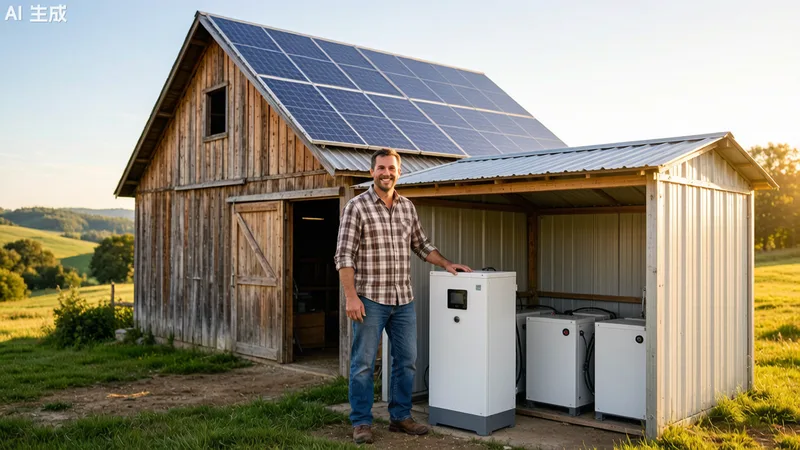
- Location: Rural Victoria, Australia
- Daily energy consumption: 45–65 kWh (irrigation pumps, refrigeration for dairy, workshop tools, farmhouse)
- Peak demand: 12 kW during irrigation season
- Existing solar: 15 kW rooftop solar array
- Primary pain point: Grid outages during summer storm season, plus high peak demand charges
System Configuration
| Component | Specification |
|---|---|
| Battery Capacity | 30 kWh LiFePO4 (2× 15 kWh Insum Energy stackable modules) |
| Inverter | 10 kW hybrid inverter (off-grid capable) |
| BMS | Smart BMS with remote monitoring |
| Solar Integration | AC-coupled with existing 15 kW array |
| Backup Coverage | Critical loads: water pumps, refrigeration, lighting, internet |
Installation Process
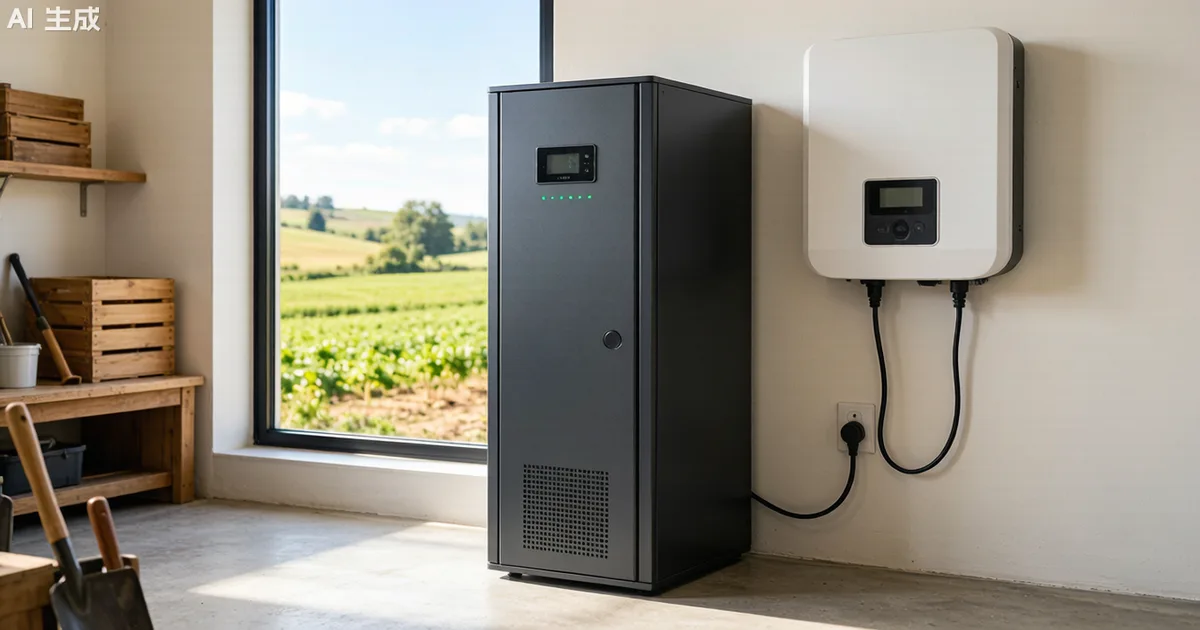
The installation took two full days. The battery bank was installed in a ventilated utility room adjacent to the main barn, with the inverter mounted on a concrete wall for heat dissipation. The farmer chose stackable modules to leave room for future expansion — a key consideration for growing agricultural operations.
Financial Results (12-Month Data)
- Total project cost: AUD $14,500 (including installation)
- Annual electricity savings: AUD $3,850
- Peak demand charge reduction: AUD $1,200/year
- Estimated payback period: 3.8 years
- Backup value: Avoided 4 production-stopping outages (estimated AUD $2,000 in prevented losses)
Key Lessons from the Farm
- Size for irrigation, not baseline. The farm’s energy demand spikes 3× during irrigation season. The battery had to be sized for the summer peak, not the winter average.
- Stackable modules are a must. The ability to add capacity later gave the farmer confidence to start with 30 kWh and expand if needed.
- Remote monitoring is non-negotiable. With the farmhouse 500 metres from the barn, Wi-Fi-connected monitoring via the BMS saved several trips in the rain.
- Consider diesel generator hybrid. For prolonged multi-day outages, the farm keeps a small diesel genny to recharge the battery bank — far cheaper than running the generator 24/7.
Case Study 2: The Retail Shop (120m², Electronics & Repairs)
Business Profile
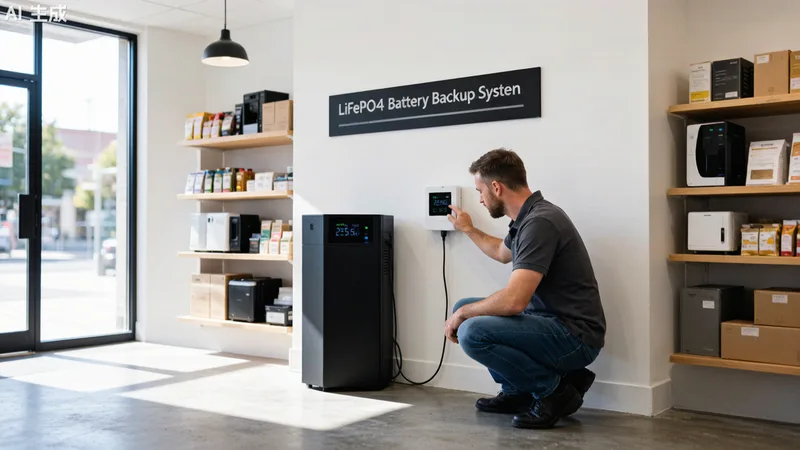
- Location: Berlin, Germany
- Daily energy consumption: 22–30 kWh (lighting, workstations, test equipment, air conditioning)
- Peak demand: 7 kW
- Existing solar: 8 kW rooftop solar array
- Primary pain point: High retail electricity tariffs (€0.32/kWh) and 2–3 brief outages per year affecting POS systems
System Configuration
| Component | Specification |
|---|---|
| Battery Capacity | 15 kWh LiFePO4 (single Insum Energy wall-mount unit) |
| Inverter | 5 kW hybrid inverter |
| BMS | Standard BMS with load-shifting schedule |
| Solar Integration | DC-coupled with 8 kW solar array |
| Backup Coverage | Full shop lighting, POS system, test equipment, 1 workstation |
Installation Process
This was a one-day installation. The wall-mount battery was installed in a back storage room, taking minimal floor space — critical for a retail shop where every square metre counts. The inverter was integrated with the existing solar setup, and the BMS was programmed for peak shaving (discharging during the 17:00–21:00 high-tariff window).
Financial Results (12-Month Data)
- Total project cost: €7,800 (including installation)
- Annual electricity savings (load shifting): €2,100
- Solar self-consumption increase: From 40% to 85%
- Estimated payback period: 3.7 years
- Backup value: Zero lost sales from outages (previously €300–500 per outage)
Key Lessons from the Retail Shop
- Load shifting beats backup for retail ROI. In Berlin, the shop saved more from shifting consumption to off-peak rates than from backup value alone.
- Wall-mount saves space. In tight retail spaces, a slim wall-mount unit beat a floor-standing rack by a wide margin.
- Programmable BMS is essential. The ability to set custom discharge schedules for peak shaving made the difference between a 4-year payback and a 7-year one.
- POS and server backup need separate circuit. The shop had to rewire the critical-load panel to ensure the POS system stayed up during a transition.
Side-by-Side Comparison
| Metric | Farm (30 kWh) | Retail Shop (15 kWh) |
|---|---|---|
| System Size | 30 kWh | 15 kWh |
| Total Cost | AUD $14,500 | €7,800 |
| Annual Savings | AUD $5,050 | €2,100 |
| Payback Period | 3.8 years | 3.7 years |
| Primary Use Case | Backup + peak shaving | Load shifting + backup |
| Space Required | Utility room (~2m²) | Wall-mount in storage room |
| Solar Self-Consumption | 65% → 92% | 40% → 85% |
5 Tips for Choosing a LiFePO4 Battery for Your Small Business
Based on these two case studies and dozens of other small business installations, here are the five most important factors to consider:
1. Size for Your Worst Day, Not Your Average Day
Small businesses have seasonal or weekly energy spikes far larger than residential homes. The farm needed 3× capacity in summer. The shop had higher demand on Mondays after the weekend restart. Always size your battery for the 90th percentile of daily usage, not the average.
2. Choose a Modular System for Future Expansion
Your business will grow. A stackable or modular LiFePO4 battery system lets you add capacity without replacing existing hardware. The farm’s 30 kWh system can expand to 60 kWh simply by adding two more modules.
3. Prioritise the Right BMS Features
For small businesses, a smart BMS with remote monitoring and programmable scheduling is worth the investment. It lets you optimise charge/discharge cycles for time-of-use tariffs without manual intervention. Check out our energy storage solutions for BMS options tailored to commercial use.
4. Consider Total Cost of Ownership, Not Just Upfront Price
Cheaper batteries often have shorter cycle life (3,000–4,000 cycles vs. 6,000+ for quality LiFePO4). Over 10 years, a higher-quality battery from a trusted supplier like Insum Energy is almost always cheaper per kWh cycled.
5. Plan the Critical Loads Panel Carefully
Not everything in your business needs backup. Identify the essential circuits (POS, lighting, security, water pumps, refrigeration) and wire them separately. This lets you buy a smaller, more affordable battery while keeping the business running.
Common Mistakes Small Business Owners Make
- Buying residential-sized batteries. A 5–10 kWh home battery is rarely enough for a business. Most small businesses need 15–30 kWh minimum.
- Ignoring time-of-use tariffs. If your utility has peak/off-peak rates, load shifting can double your savings. Configure your BMS accordingly.
- Skipping professional load analysis. A proper energy audit before purchase ensures you buy the right size — not too big (wasted money) and not too small (frustration).
- Forgetting about temperature. LiFePO4 batteries perform best between 15°C–35°C. If your storage area is uninsulated, factor in thermal management costs.
Frequently Asked Questions
Can I install a LiFePO4 battery myself for my small business?
We strongly recommend professional installation for any system over 5 kWh. The electrical work required (critical loads panel, wiring, inverter integration) demands a licensed electrician. An improperly installed system voids warranties and creates fire risks.
How long do LiFePO4 batteries last for small business use?
Quality LiFePO4 batteries rated for 6,000 cycles at 80% depth of discharge will last 12–16 years in typical small business use (one full cycle per day). This is significantly longer than lead-acid (3–5 years) or NMC (5–8 years).
What is the payback period for a small business LiFePO4 battery?
Based on our case studies and market data, most small businesses see a payback period of 3–5 years. Factors that accelerate payback include: high local electricity rates, generous solar feed-in tariffs, available government subsidies, and frequent grid outages.
Ready to Power Your Small Business with LiFePO4?
Every small business has a unique energy profile. Whether you run a farm, a shop, a workshop, or an office, contact Insum Energy for a free energy consultation. Our team will analyse your usage patterns, recommend the right battery size and configuration, and provide a detailed cost-benefit analysis tailored to your business.
Explore our full range of LiFePO4 battery products designed for small and medium business applications — from 5 kWh wall-mount units to 60 kWh stackable commercial systems.