How to Design a Residential Solar Energy System: A Complete Step-by-Step Guide
Designing a residential solar energy system can feel overwhelming at first — but with the right framework, it is entirely manageable for homeowners looking to cut electricity costs and reduce their carbon footprint. In this guide, we walk you through the complete process that professionals at Insum Energy use to build reliable, high-performance solar setups.
Step 1: Analyze Your Energy Consumption
Before purchasing a single panel, review 12 months of your electricity bills. Look for your average monthly kWh usage and identify peak months. This gives you a realistic baseline to size your system accurately and avoid over- or under-building.
- Pull annual kWh data from your utility provider portal
- Note seasonal variations — HVAC-heavy summer and winter months often drive the highest usage
- Factor in future changes such as purchasing an EV or adding a home office
Step 2: Evaluate Your Site Conditions
Not every roof is ideal for solar. The best installations have minimal shading, a south-facing slope (in the Northern Hemisphere), and structural integrity to support panel weight. Use solar path tools or hire a professional site assessment to quantify your solar window.
- Shading analysis with tools like Google Project Sunroof or on-site shading audits
- Roof orientation and tilt angle — ideally 15–40 degrees for year-round output
- Roof condition — replace or repair before installing to avoid removing panels later
Step 3: Size Your System Correctly
System size is measured in kilowatts (kW). A simple formula: multiply your annual kWh usage by 1.1–1.3 to account for system losses, then divide by your location’s peak sun hours to get the required kW capacity. For most U.S. homes, a 5–10 kW system covers daily needs.
- Annual kWh x 1.2 / local peak sun hours = recommended system size (kW)
- Most residential panels today are 400–450W each
- A 6 kW system typically uses 15–18 panels and covers 800–1,000 sq ft of roof space
Step 4: Choose the Right Components
The four core components are panels, inverters, mounting hardware, and battery storage (if desired). Monocrystalline panels offer the highest efficiency for residential use. String inverters are cost-effective; microinverters or power optimizers are better for partially shaded roofs.
- Panels: Monocrystalline (20–22% efficiency) over polycrystalline for limited roof space
- Inverters: String inverters for uniform sun exposure; microinverters for complex layouts
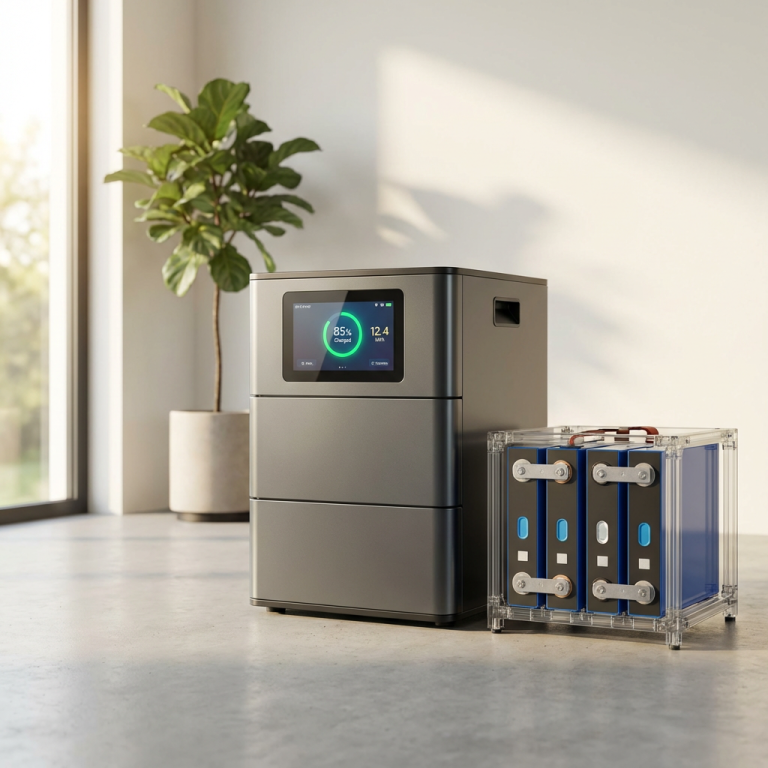
- Battery storage: Lithium iron phosphate (LiFePO4) for safety and cycle life
Step 5: Review Incentives and Net Metering
The U.S. federal solar tax credit (ITC) covers 30% of system costs through 2032. Many states and utilities offer additional rebates, SREC programs, or favorable net metering rates. Understanding these can dramatically improve your return on investment timeline.
- Federal ITC: 30% tax credit on total installed cost
- State and local rebates — vary significantly by ZIP code
- Net metering: earn credits for excess energy exported to the grid
Step 6: Plan for Installation and Monitoring
Choose a licensed, NABCEP-certified installer with local permits experience. After installation, set up monitoring software to track real-time production, consumption, and system health. Most modern systems include a smartphone app for ongoing performance visibility.
- Verify installer credentials and check local customer reviews
- Obtain necessary permits — a reputable installer handles this
- Set up monitoring alerts for production drops that signal maintenance needs
Ready to design your custom solar energy system? The team at Insum Energy specializes in residential and commercial solar installations tailored to your energy goals and budget. Contact Insum Energy today for a free consultation and customized system design proposal.
Tags: Solar Energy, Residential Solar, Solar System Design, Solar Installation, Clean Energy, Home Energy, Insum Energy