314Ah vs 280Ah LiFePO4: Choosing the Best Cell for Home Energy Storage
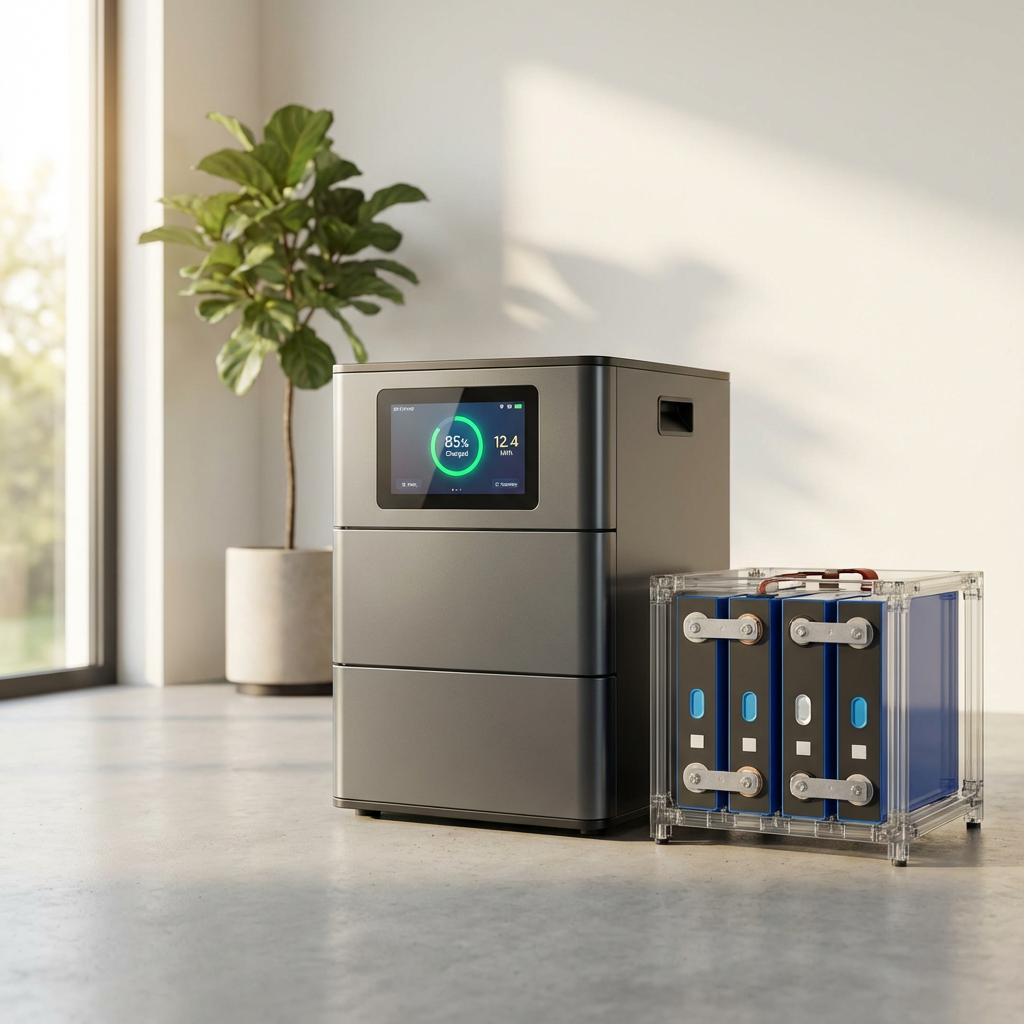
As the global shift toward renewable energy accelerates, residential energy storage systems (ESS) have become the cornerstone of home energy independence. For DIY enthusiasts and professional installers alike, selecting the right battery cell is the most critical decision in building a reliable system. For years, the 280Ah LiFePO4 cell was the undisputed champion of the market. However, 2025 marks a significant turning point as the industry shifts toward the higher-capacity 314Ah LiFePO4 cells.
The Legacy of the 280Ah Cell
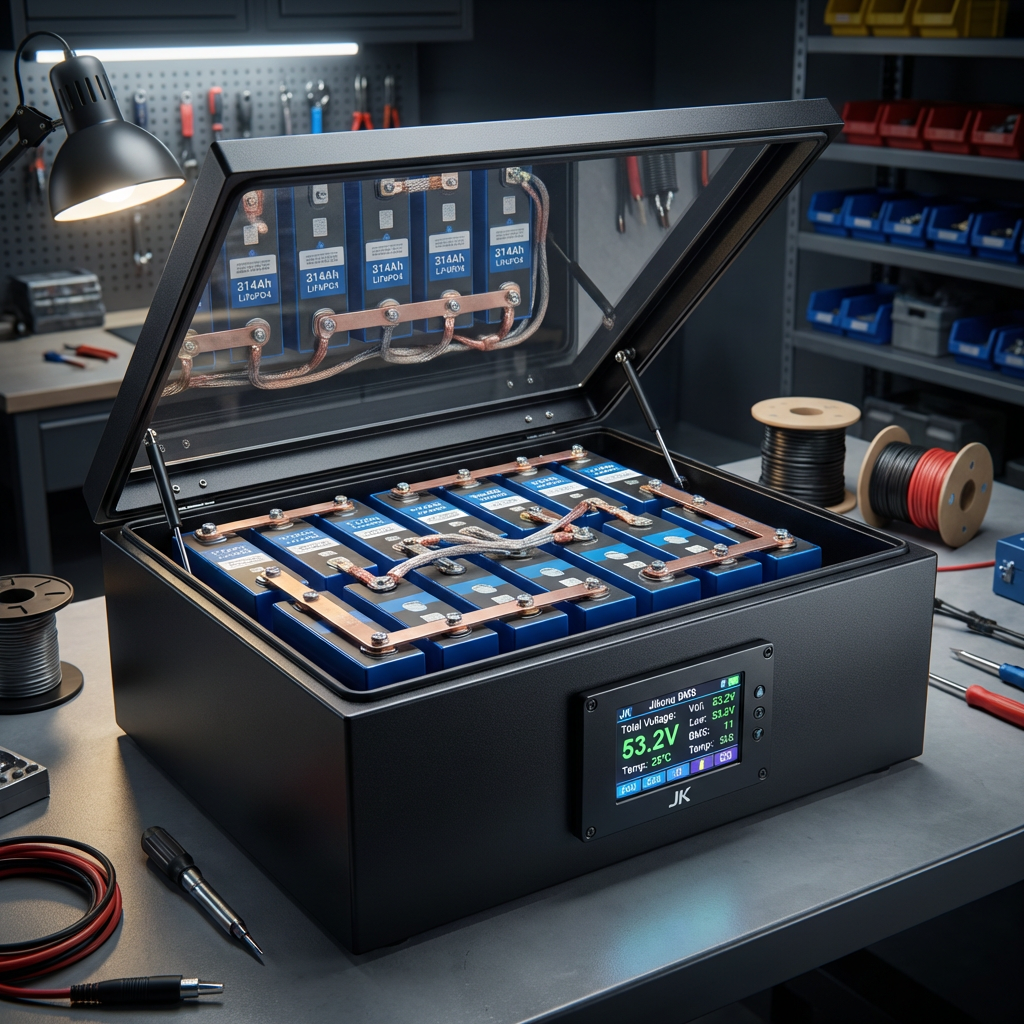
The 280Ah prismatic cell gained popularity due to its perfect balance of capacity, size, and thermal stability. It became the standard for DIY kits, such as the INSUM 280L-JK, providing a robust 14.3kWh of energy in a standard 16S (48V/51.2V) configuration. Its reliability and well-documented performance made it the go-to choice for off-grid living and backup power.
Why the Shift to 314Ah?
In the pursuit of higher energy density without increasing the physical footprint of the battery cabinet, manufacturers developed the 314Ah cell. While maintaining almost identical dimensions to the 280Ah predecessor, the 314Ah cell offers several technical advantages:
- Increased Energy Density: A 314Ah cell provides approximately 12% more capacity per unit. In a standard 16S home storage rack, this pushes the total energy from 14.3kWh to over 16kWh, allowing homeowners to store more solar energy for night use or extended outages.
- Improved Cycle Life and Efficiency: Newer 314Ah cells often feature optimized internal resistance and advanced chemical formulations that reduce heat generation during high-current discharge, potentially extending the overall lifespan of the battery bank.
- Cost-Efficiency: As production scales, the cost-per-watt-hour ($/Wh) of 314Ah cells has become increasingly competitive, often making them a more economical long-term investment compared to 280Ah alternatives.
Safety and Management: The Role of BMS
With larger capacity cells, precise management becomes even more vital. Advanced systems like the Jikong (JK) BMS are essential for monitoring these high-density cells. A professional BMS ensures active balancing, overcharge protection, and real-temperature monitoring—critical factors when managing a 16kWh+ home energy reservoir. At Insum Energy, we emphasize that safety is the core value of energy storage, which is why our DIY kits integrate the latest BMS technology to protect your investment.
Conclusion: Future-Proofing Your Energy
While 280Ah cells remain a reliable and cost-effective option for many, the 314Ah cell represents the future of residential energy storage. It offers more power in the same space, better efficiency, and a path toward true energy autonomy.
Whether you are looking for a complete DIY kit or individual Grade A cells, Insum Energy is committed to providing the latest LFP technology to power your home safely and efficiently.
Visit insumenergy.com to explore our latest 280Ah and 314Ah LiFePO4 DIY solutions.