Complete Home Energy Storage Guide 2026: How to Choose the Right Battery System
Why Home Energy Storage is Essential in 2026
As electricity costs continue to rise globally and grid instability becomes more common, home energy storage systems have transitioned from a luxury to a necessity. Whether you’re pairing batteries with solar panels or looking for backup power during outages, choosing the right energy storage solution can save you thousands of dollars over its lifetime.
Understanding Battery Chemistry: LiFePO4 vs NMC vs Lead-Acid
Not all batteries are created equal. Here’s what you need to know:
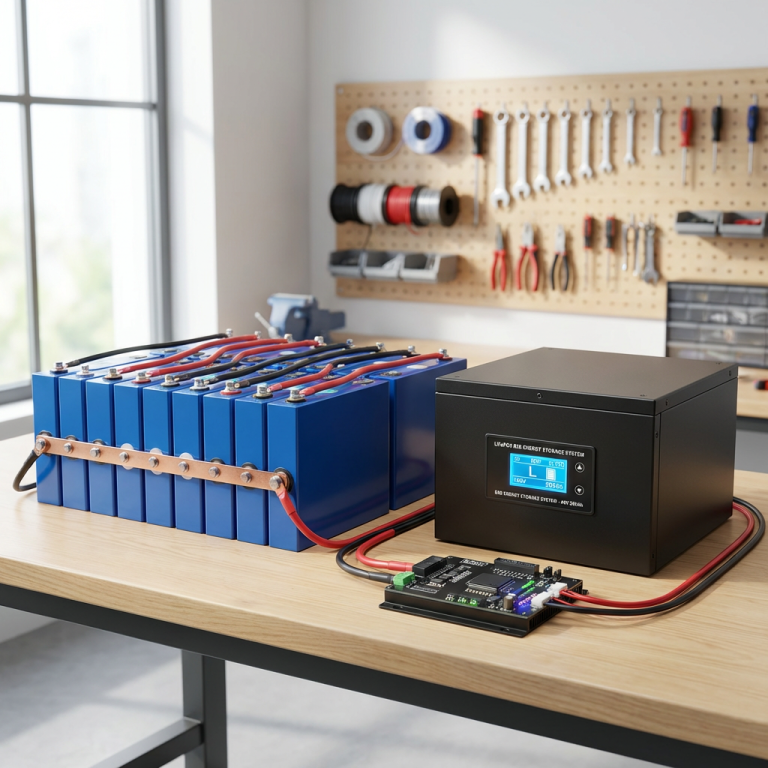
- LiFePO4 (Lithium Iron Phosphate): The gold standard for home energy storage. 6000+ cycles, excellent thermal stability, and 10-15 year lifespan. Slightly more expensive upfront but best ROI.
- NMC (Nickel Manganese Cobalt): Higher energy density but shorter cycle life (3000-4000 cycles). More common in EVs than stationary storage.
- Lead-Acid: Cheapest upfront but only 500-1000 cycles. Requires maintenance and has low Depth of Discharge (DoD). Not recommended for daily cycling.
How to Size Your Home Battery System
Sizing correctly prevents overspending or running out of power. Follow these steps:
- Calculate your daily energy consumption: Check your utility bill for kWh usage. Average US household: 30 kWh/day.
- Decide your backup duration: 1 day (10-15 kWh), 2-3 days (20-40 kWh), or whole-home backup (50+ kWh).
- Account for efficiency losses: Factor in 10-15% inverter losses and battery round-trip efficiency.
- Plan for future expansion: Choose a modular system (like Insum Energy’s rack batteries) that allows adding capacity later.
Key Features to Look For
When comparing energy storage systems, prioritize these features:
- Scalability: Can you add more batteries later without replacing the inverter?
- BMS (Battery Management System): Essential for cell balancing, overcharge/over-discharge protection, and thermal management.
- Inverter compatibility: Ensure the battery works with hybrid inverters (SMA, Victron, Deye, etc.).
- Warranty: Look for minimum 10 years or 6000 cycles at 80% DoD.
- Monitoring: App or web dashboard to track SOC, health, and energy flow in real-time.
Integration with Solar: AC-Coupling vs DC-Coupling
If you have or plan to install solar panels, you have two options:
- DC-Coupled: Battery connects to the solar inverter’s DC bus. Higher efficiency (single conversion), but requires compatible hybrid inverter.
- AC-Coupled: Battery has its own inverter; connects to your home’s AC panel. Easier retrofitting, works with existing solar inverters, but slightly lower efficiency (double conversion).
For most retrofits, AC-coupling offers the simplest installation. For new installations, DC-coupling maximizes efficiency.
Cost Breakdown and ROI
Typical system costs in 2026:
- 10 kWh LiFePO4 system: $4,000 – $6,000 (equipment only)
- Full installation with inverter: $8,000 – $12,000
- Payback period: 5-8 years (depending on electricity rates and incentives)
With the US federal tax credit (30% through 2032) and many state incentives, ROI is accelerating. Some areas offer additional rebates for VPP (Virtual Power Plant) participation.
Common Mistakes to Avoid
- Undersizing the system and running out of power during multi-day outages
- Choosing warranty over chemistry—a 15-year warranty on lead-acid is still a poor investment
- Ignoring inverter sizing—your battery is only as good as the inverter’s continuous power rating
- Not planning for cold climates—some batteries lose significant capacity below freezing
Conclusion
Home energy storage is a long-term investment that pays dividends in energy independence, lower bills, and peace of mind. Focus on LiFePO4 chemistry, scalable architecture, and reputable manufacturers with proven track records.
Ready to Power Your Home?
Insum Energy specializes in high-quality LiFePO4 battery solutions designed for residential and commercial energy storage. From compact wall-mounted units to scalable rack systems, we have the right solution for your energy needs.
Contact Insum Energy today for a free consultation and customized storage design:
📧 Email: info@insumenergy.com
🌐 Website: insumenergy.com
📞 Get in touch for pricing and technical specs